Joint pain can come from cartilage wear, inflammation, gout, injury, tendon problems or a nerve elsewhere in the body, so the right treatment starts with identifying the cause. By the end, you will know what an Ayurvedic assessment should include, which procedures may support comfort, what evidence-based care must remain in place and how to monitor whether the plan is helping.
Key takeaways
- Identify the joint, pain pattern, swelling, stiffness, injury history, and current medicines first.
- Choose treatment after assessing movement, gait, tenderness, skin changes, and existing conditions.
- Track walking, stairs, range of motion, stiffness duration, swelling, and pain over time.
- Tell every clinician about Ayurvedic medicines and procedures before combining them with prescriptions.
What should be checked before treating joint pain?
Joint pain diagnosis must come before choosing treatment. A clinician should identify the exact joint and pain pattern, check movement, gait, tenderness, injury history, skin changes, morning stiffness and joint swelling, then review medicines and existing conditions.
Prompt biomedical assessment takes priority when you have:
- A hot, red, suddenly swollen joint, fever, chills or feeling acutely unwell; infection or gout needs rapid evaluation.
- Inability to bear weight, severe pain after an injury, visible deformity or sudden loss of movement; these findings can indicate fracture, dislocation or serious tissue damage.
- Morning stiffness lasting more than 30–60 minutes, swelling in several joints, symmetrical hand or foot symptoms, psoriasis or unexplained weight loss; inflammatory arthritis needs assessment rather than Panchakarma alone.
- Numbness, weakness, shooting pain or back pain travelling into a limb; nerve-related or referred pain may not originate in the joint.
Short morning stiffness with activity-related knee or hip pain and no red flags can fit osteoarthritis, although examination is still necessary. The pattern can also reflect bursitis, tendon disease or gout. An Ayurvedic assessment for joint pain may describe vata, ama or dosha imbalance, but those concepts do not replace examination or testing.
Ask whether you need an X-ray, ultrasound, MRI, blood count, inflammatory markers, uric acid, rheumatoid factor or anti-CCP testing. Use Ayurvedic care as support only after urgent causes are excluded, and do not stop prescribed medicines without the prescribing clinician.
What does a practical Ayurvedic treatment plan include?
A practical plan starts with a working diagnosis, a baseline and a clear review date. The consultation should record the painful joint, swelling, stiffness duration, range of motion, gait, walking tolerance, sleep, daily limitations and every medicine or supplement you use.
- Consultation: Ask how the findings fit osteoarthritis, inflammatory arthritis, gout, tendon pain or nerve-related pain, and whether imaging or blood tests are needed.
- Medicine selection: Request the exact product name, ingredients, manufacturer, batch details, named formulation, dose and duration. Check interactions with anticoagulants, diabetes medicines, steroids, blood-pressure treatment and kidney-toxic drugs; never stop prescribed treatment without the prescriber’s advice.
- Exercise planning: Build a graded programme around strengthening, joint range of motion, balance and walking. Exercise for osteoarthritis should progress slowly and include physiotherapy when weakness, poor gait or persistent limitation affects daily tasks.
- Follow-up: Set a review date, such as 2–4 weeks, rather than continuing indefinitely. Record pain and stiffness scores, walking distance, stair or chair-rise ability, analgesic use and adverse effects.
At review, continue the plan only if function is improving without new swelling, worsening pain or medicine-related effects. Change the dose, exercise load or treatment approach when progress stalls; brief comfort after massage or heat does not prove cartilage repair or disease reversal.
Which external and Panchakarma procedures may be relevant?
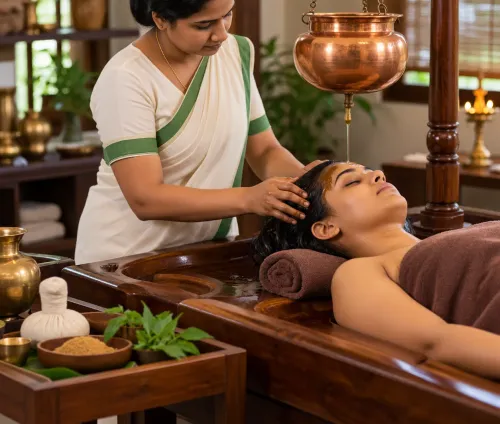
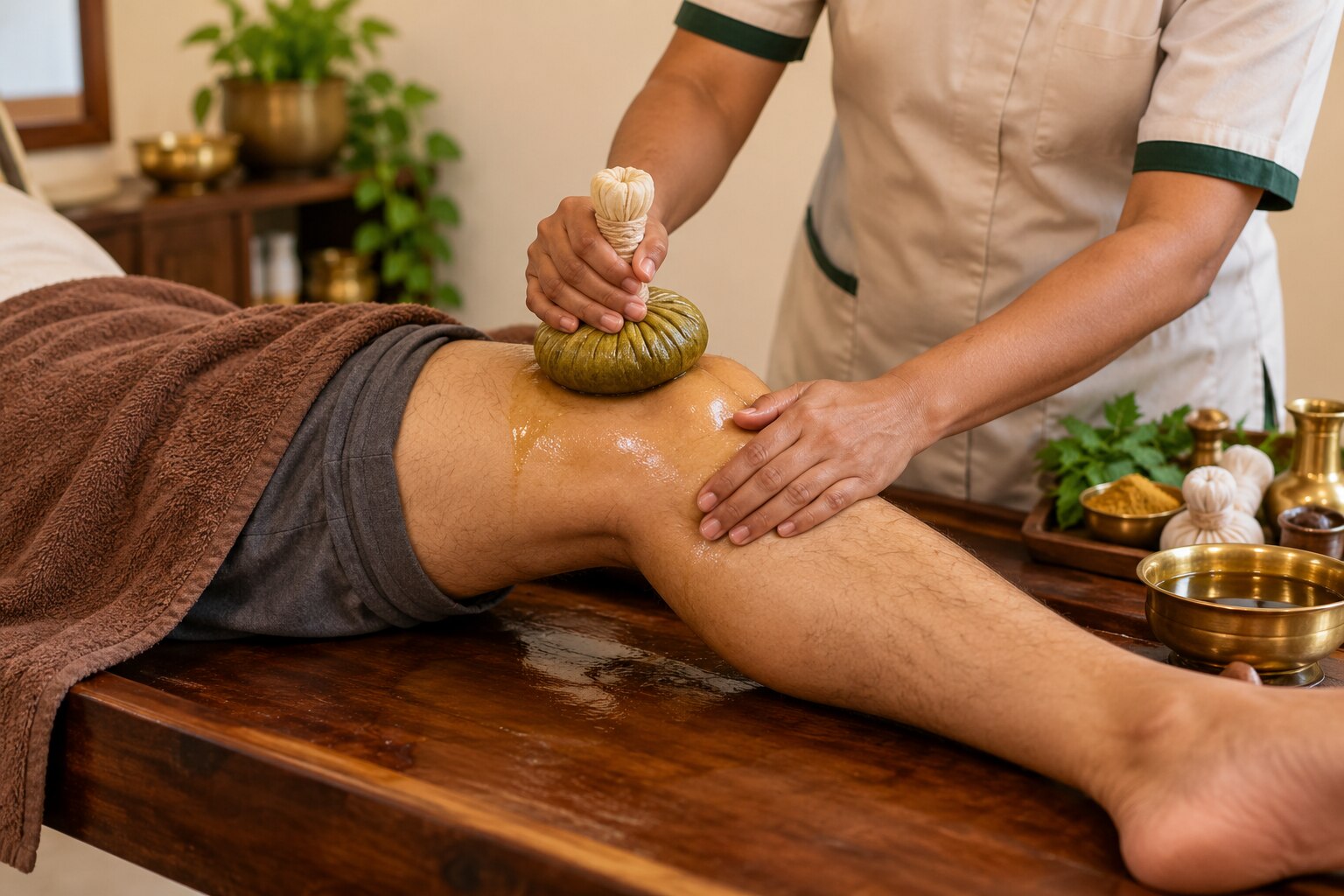
Abhyanga for joint pain uses oil massage to ease perceived stiffness and prepare you for movement. Local oil application or gentle heat may provide short-term comfort, but neither restores damaged cartilage. Use heat only when the joint is not acutely hot, swollen or infected; vigorous massage can worsen an injury or inflammatory flare.
Keep strengthening, walking plans and physiotherapy central.
Ask the clinician these questions before agreeing to a procedure:
- Which diagnosis is being treated, and what finding supports it?
- What pressure, oil, temperature and duration will be used?
- Which medicines, kidney problems, bleeding risks or skin conditions make the procedure unsafe?
- What result will end the treatment if pain, swelling or mobility does not improve?
| Option | Possible role | Main caution |
|---|---|---|
| Abhyanga or local oil application | Temporary stiffness relief before gentle movement | Avoid vigorous pressure over injury, marked swelling or an inflammatory flare |
| Local heat | Short-term comfort and easier mobility | Do not heat a hot, red, swollen or infected joint |
| Panchakarma for arthritis | A practitioner-selected programme after diagnosis and medical review | It cannot promise cartilage regrowth, a cure or avoidance of surgery |
| Vaman | Therapeutic emesis within selected Panchakarma protocols | Vomiting can cause dehydration, electrolyte disturbance and aspiration risk |
| Nasya | Nasal administration used for specific indications, not every joint complaint | Avoid unsupervised use; nasal irritation and medicine interactions require review |
Stop and seek medical assessment for fever, a hot red joint, inability to bear weight or worsening function. Do not stop steroids, anticoagulants or other prescribed medicines to begin Panchakarma.
How can Ayurvedic care be combined with prescribed treatment?
Do not stop a prescribed medicine when starting Ayurveda. Give both clinicians a complete list of tablets, injections, oils, powders and supplements, including doses and brand names. This allows review of Ayurvedic medicine interactions, kidney or liver risks, bleeding risk and duplicate ingredients.
Combining Ayurveda and anti-inflammatory drugs requires particular caution if you have ulcers, kidney disease, take anticoagulants or use corticosteroids.
Use this coordination plan:
- For rheumatoid arthritis medicines, including steroids and DMARDs, keep the rheumatologist’s schedule unless that prescriber changes it. An Ayurvedic internal medicine or cleansing procedure must be cleared first because infection, liver injury or delayed disease control can follow an unsafe combination.
- For gout treatment, do not replace urate-lowering medicines with diet advice or symptom relief. A sudden hot, red, swollen joint needs medical assessment; massage or heat can aggravate an acute flare.
- Continue prescribed physiotherapy, strengthening and activity pacing. Use Ayurvedic massage, oil application or heat as an adjunct, not instead of progressive rehabilitation.
- Ask the physiotherapist to assess a walking aid’s height and use. A cane held in the opposite hand can reduce load on a painful hip or knee, while incorrect fitting can worsen posture and falls.
- Before injections or joint-replacement surgery, disclose every Ayurvedic product and procedure. The surgical team can decide what to pause, manage bleeding or anaesthesia concerns, and set a safe restart date.
Arrange a shared review if pain, swelling, walking distance or medicine side effects worsen. A short-term comfort gain does not justify delaying disease-modifying treatment or surgical evaluation.
How do you know whether the plan is improving mobility?
At the agreed review date, compare your baseline with measurable changes rather than relying on a general impression. Useful mobility tracking records pain and stiffness scores, walking tolerance, stair use, chair rises, sleep, daily tasks, analgesic use and adverse effects. Less pain matters, but restored function is the stronger sign of useful support.
| Measure | Improvement to look for | Review question |
|---|---|---|
| Walking tolerance | Longer distance or more time before stopping | Can you walk farther without a flare the next day? |
| Daily function | Easier chair rises, stairs, dressing or cooking | Which task has become easier, and by how much? |
| Symptoms and medicines | Lower stiffness or pain, with no increase in painkillers | Is the gain lasting between treatments? |
| Treatment safety | No rash, stomach upset, dizziness, bleeding, worsening swelling or abnormal test result | Could a medicine, procedure or interaction be causing harm? |
Ask for a written change to the plan if function is unchanged by the review point, benefits last only hours, or exercises are being displaced by massage, heat or Panchakarma. Integrated Ayurvedic care should preserve prescribed treatment and rehabilitation, not postpone them.
At Omkar Ayurved, take your medicine list and baseline measurements to each joint pain follow-up so the clinician can assess benefit and coordinate care. Seek prompt biomedical assessment for a hot red joint, fever, unexplained weight loss, persistent swelling, prolonged morning stiffness or inability to bear weight.
Related services
Ayurvedic Treatment Arthritis/Joint Related Disease Ayurvedic Treatment For Arthritis/Joint Related Disease It is not a disease but it is one of the symptoms of sandhi vata, amvat, vatarakta, jirna... View service → |
Ayurvedic Treatment Spondylits/Sciatica/Vertebral Coloumn Disorder Ayurvedic Treatment For Spondylits/Sciatica/Vertebral Coloumn Disorder Spondilitis is the result of an inflammation of the vertebral joints. View service → |
Frequently asked questions
What should be checked before treating joint pain?
Check the exact joint, pain pattern, movement, gait, tenderness, injury history, skin changes, morning stiffness, swelling, medicines, and existing conditions.
What does a practical Ayurvedic treatment plan include?
It includes an assessment-led combination of internal care, daily routine guidance, movement support, diet considerations, and scheduled reviews rather than a generic remedy.
Which external and Panchakarma procedures may be relevant?
A clinician selects external therapies or Panchakarma procedures after assessing the pain pattern, joint findings, strength, health history, and suitability for the procedure.
How can Ayurvedic care be combined with prescribed treatment?
Share a complete list of prescriptions, over-the-counter medicines, and Ayurvedic products with both clinicians, and do not stop prescribed treatment without medical advice.
How do you know whether the plan is improving mobility?
Record walking distance, stair use, range of motion, morning-stiffness duration, swelling, pain during activities, and the time needed for everyday tasks.
Related services
Ayurvedic Treatment Ayurvedic Treatment For Abdominal Disorders The term “Ayurveda” combines the Sanskrit words ayur (life) and veda (science or knowledge). View service → |
Panchkarma Best Abhyanga/Snehan Treatment in Pune Panchakarma means the five ‘kriyas’, which is to purify and eliminate the impurities from the body. View service → |