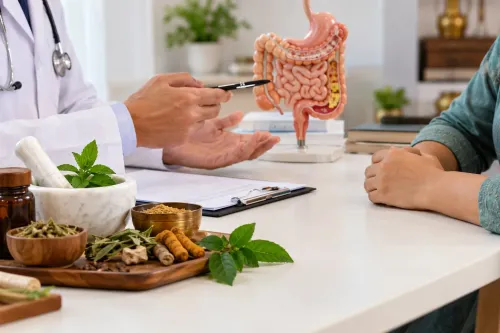

The same diagnosis does not automatically call for the same Panchakarma procedure. By the end, you will know how a practitioner links your symptoms, Ayurvedic assessment, medical history, treatment goal and safety limits to a procedure—or decides that Panchakarma is not the right choice.
Key takeaways
- A diagnosis alone does not determine whether Panchakarma is suitable.
- Match each procedure to a specific treatment goal and current capacity.
- Complete consultation, preparation, and recovery planning before treatment.
- Ask how risks, alternatives, and follow-up will be handled.
Why two people with the same condition may receive different treatments
The same diagnosis does not make Panchakarma appropriate for every person. Panchakarma selection considers whether elimination matches your treatment goal, current condition, and capacity to tolerate the process.
A practitioner reviews:
- Your prakriti, or baseline constitution, and vikriti, or present dosha imbalance
- Symptoms, affected tissues, disease severity, strength, age, and previous treatment
- Agni, including appetite, digestion, bowel movements, and signs of ama
- Blood pressure, hydration, sleep, urinary function, medicines, pregnancy or menstrual status
- Season, relevant examination findings, laboratory results, contraindications, and your consent
This assessment determines whether the goal is elimination, symptom relief, local treatment, rehabilitation, or general wellbeing. A person with strong digestion and a clear indication may be considered for an intensive procedure; someone weak, dehydrated, pregnant, acutely unwell, or carrying substantial ama may need stabilising care first.
Panchakarma is not a compulsory “detox” package. A practitioner may select one procedure, preparation and supportive care, a local therapy, or no Panchakarma when the risks outweigh the likely benefit. The plan should state its goal, endpoint, alternatives, expected adverse effects, monitoring arrangements, and urgent-referral plan.
Do not postpone diagnosis or effective treatment for serious symptoms while pursuing a general detoxification claim.
How the five principal procedures are matched to a treatment goal
A kapha-dominant pattern with suitable strength may point toward Vamana, while pitta-pattern symptoms may point toward Virechana. The choice still depends on diagnosis, affected tissues, age, digestion, season, medicines, and the goal: elimination, symptom relief, local treatment, rehabilitation, or general wellbeing.
| Procedure | Traditional pattern | Goal and important boundary |
|---|---|---|
| Vamana | Increased kapha, such as heaviness or persistent mucus | Therapeutic emesis for selected upper-body kapha patterns; not a routine “detox” |
| Virechana | Increased pitta, such as heat or certain bowel and skin patterns | Therapeutic purgation when digestion, hydration, strength, and bowel function support it |
| Basti | Vata-related pain, dryness, stiffness, or irregular bowel function | Medicated enema aimed at vata and deeper systemic support; it is not interchangeable with a local oil treatment |
| Nasya | Head, neck, sinus, or upper-airway patterns | Nasal administration for a suitable local or dosha-related goal, not a substitute for urgent respiratory care |
| Raktamokshana | A narrowly assessed local blood or inflammatory indication | Blood removal in some lineages; bleeding, infection, anaemia, and fainting risks require strict justification |
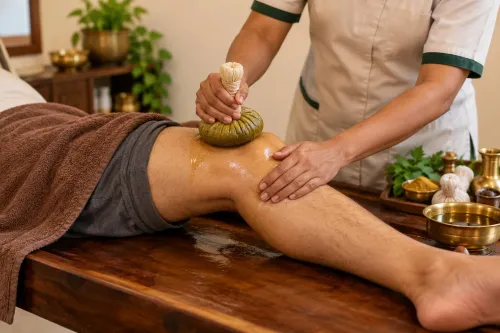
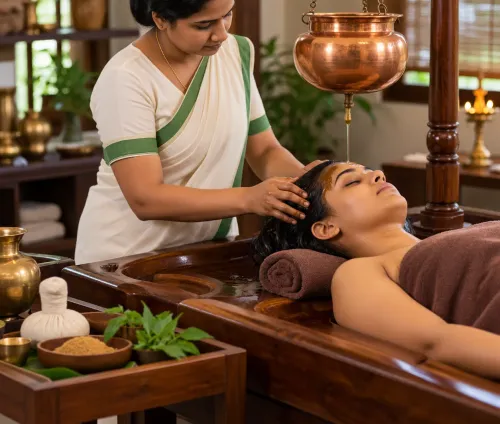
A person with weak digestion, low strength, dehydration, pregnancy, or an unstable illness may receive palliative care instead of elimination. Snehana, Abhyanga, Swedana, Pizhichil, or localized Basti may address symptoms without using a principal procedure.
“Detoxification” alone is not an indication. Ask for the documented imbalance, intended endpoint, alternatives, adverse effects, and referral plan; traditional dosha matching does not prove that Panchakarma cures a biomedical disease.
What the consultation checks before any procedure is approved
A Panchakarma consultation should pause or refuse a procedure when your medical stability, medicines or life stage makes emesis, purgation, enema, nasal administration or blood removal unsafe. Pregnancy and Panchakarma require separate assessment; strong elimination procedures are not accepted by default during pregnancy or soon after delivery.
| Finding | Effect on approval | What to disclose or check |
|---|---|---|
| Active bleeding, bleeding disorder, anticoagulants or antiplatelet drugs | Can rule out raktamokshana and invasive procedures | Drug name, dose, clotting history and prescribing clinician’s advice |
| Recent surgery, severe weakness, dehydration or previous fainting | Usually postpones treatment until recovery and stable hydration | Surgery date, fainting episodes, blood pressure and fluid intake |
| Kidney or liver disease, uncontrolled diabetes or unstable blood pressure | May rule out fasting-related regimens or require medical clearance | Diagnoses, recent laboratory results and every medicine |
| Pregnancy, early postpartum period, frailty or advanced age | Usually excludes strong elimination and changes dose, route and monitoring | Pregnancy status, delivery date, menstrual status and functional strength |
Do not stop anticoagulants, diabetes medicines or blood-pressure medicines yourself. The prescribing clinician must approve any change.
The assessment also records prakriti, vikriti, agni, ama, appetite, bowel and urinary function, sleep, season, previous treatments and the treatment goal. A claimed “detox” benefit does not replace diagnosis or standard care. If skin or inflammatory symptoms prompt raktamokshana, discuss bleeding, infection, anaemia and vasovagal risks before considering it.
How preparation and recovery change the treatment plan
The main procedure is only one part of a Panchakarma plan. Preparation builds readiness for the selected route of treatment; recovery determines how quickly normal food, activity and medicines return.
1. Begin with preparation. The practitioner may adjust digestion and appetite, prescribe internal Snehana, or use external oleation such as Abhyanga. Swedana follows when sweating or fomentation is suitable. Pizhichil, a continuous warm oil treatment, is not interchangeable with every form of oleation; strength, skin condition, season and the treatment goal guide its use.
2. Match the medicine and route to the target. Nasya delivers a preparation through the nose for selected head, neck or upper-airway conditions, while Basti delivers medicine through the rectal route. Vamana and Virechana require different medicines and monitoring.
Ask for the exact ingredients, dose, manufacturer, batch number and testing; “natural” does not rule out drug interactions or contamination with lead, mercury or arsenic.
3. Set dose, temperature and duration to the person, not the package. Age, body strength, digestion, hydration, diagnosis, current medicines and kidney or liver function affect the decision. A warm oil treatment that suits one person can cause dizziness or overheating in another.
Do not stop anticoagulants, diabetes medicines or blood-pressure medicines without the prescribing clinician.
4. Plan recovery before treatment starts. After intensive elimination, Samsarjana Krama gradually rebuilds food intake, beginning with light meals and increasing quantity and complexity as digestion returns. The plan should state rest, fluids, follow-up, warning symptoms and when urgent referral is needed.
How to judge whether a proposed Panchakarma plan is personalised and safe
A personalised plan explains why a particular procedure fits your diagnosis, symptoms, dosha pattern, tissue involvement, strength, age, digestion, season and treatment goal. Ask what finding supports each step, what endpoint will show success, and why no procedure—or a gentler supportive measure—is safer.
1. What is the documented goal: symptom relief, disease-specific care, rehabilitation, or general wellbeing? Ask what evidence supports the proposed benefit and whether delaying diagnosis or effective treatment would create risk. “Detoxification” alone is not a medical indication, and evidence for general detox or disease prevention remains limited.
2. Which medicines and conditions change the plan? Disclose anticoagulants, antiplatelet drugs, diabetes or blood-pressure medicines, kidney or liver disease, bleeding disorders, fainting, pregnancy, and recent surgery. Never stop a prescribed medicine without its clinician’s advice.
3. What exactly will you receive? Request the preparation’s ingredients, dose, manufacturer, batch number and testing records. “Natural” does not exclude lead, mercury, arsenic or medicine interactions.
4. If Raktamokshana is proposed, ask why diagnosis and standard care are insufficient, and how bleeding, infection, anaemia and fainting will be prevented. It is invasive, not a routine add-on.
5. Ask about contraindication screening, hygiene, monitoring, informed consent and urgent referral. Panchakarma safety requires properly sterilised or single-use equipment and a clear response plan.
A clinic such as Omkar Ayurved should be able to explain these decisions before you accept a wellness Panchakarma or seasonal programme. Claims that everyone needs all five procedures, or that severe reactions prove effectiveness, are warning signs.
Related services
Panchkarma Vaman Best Vaman Treatment in Pune Panchakarma means the five ‘kriyas’, which is to purify and eliminate the impurities from the body. |
Panchkarma Best Rakta Mokshan Treatment in Pune Panchakarma means the five ‘kriyas’, which is to purify and eliminate the impurities from the body. View service → |
Frequently asked questions
Why might two people with the same condition receive different Panchakarma treatments?
Their age, strength, symptoms, digestion, existing illnesses, treatment goals, and ability to tolerate the process can differ. Panchakarma selection considers the whole person rather than the diagnosis alone.
How are the five Panchakarma procedures matched to a treatment goal?
The practitioner selects among Vamana, Virechana, Basti, Nasya, and Raktamokshana according to the intended therapeutic goal, the person’s condition, and whether the procedure is appropriate and safe.
What does an Ayurvedic consultation check before Panchakarma?
The consultation reviews your symptoms, medical history, medicines, digestion, strength, age, current health status, and treatment goals before approving a procedure.
How do preparation and recovery affect a Panchakarma plan?
The plan must include preparation before the procedure and suitable food, rest, monitoring, and follow-up afterward. These requirements affect timing, duration, and whether treatment should proceed.
Related services
Panchkarma Nasya Best Nasya Treatment in Pune Panchakarma means the five ‘kriyas’, which is to purify and eliminate the impurities from the body. |
Panchkarma Best Abhyanga/Snehan Treatment in Pune Panchakarma means the five ‘kriyas’, which is to purify and eliminate the impurities from the body. View service → |
Panchkarma Best Kshar Karma Treatment in Pune Panchakarma means the five ‘kriyas’, which is to purify and eliminate the impurities from the body. View service → |
Panchkarma Best Janu Basti Treatment in Pune Panchakarma means the five ‘kriyas’, which is to purify and eliminate the impurities from the body. View service → |