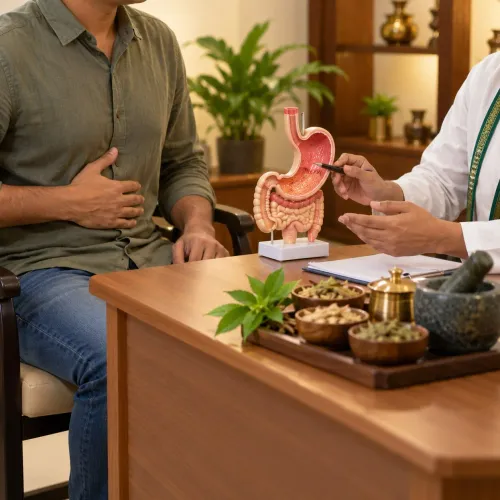
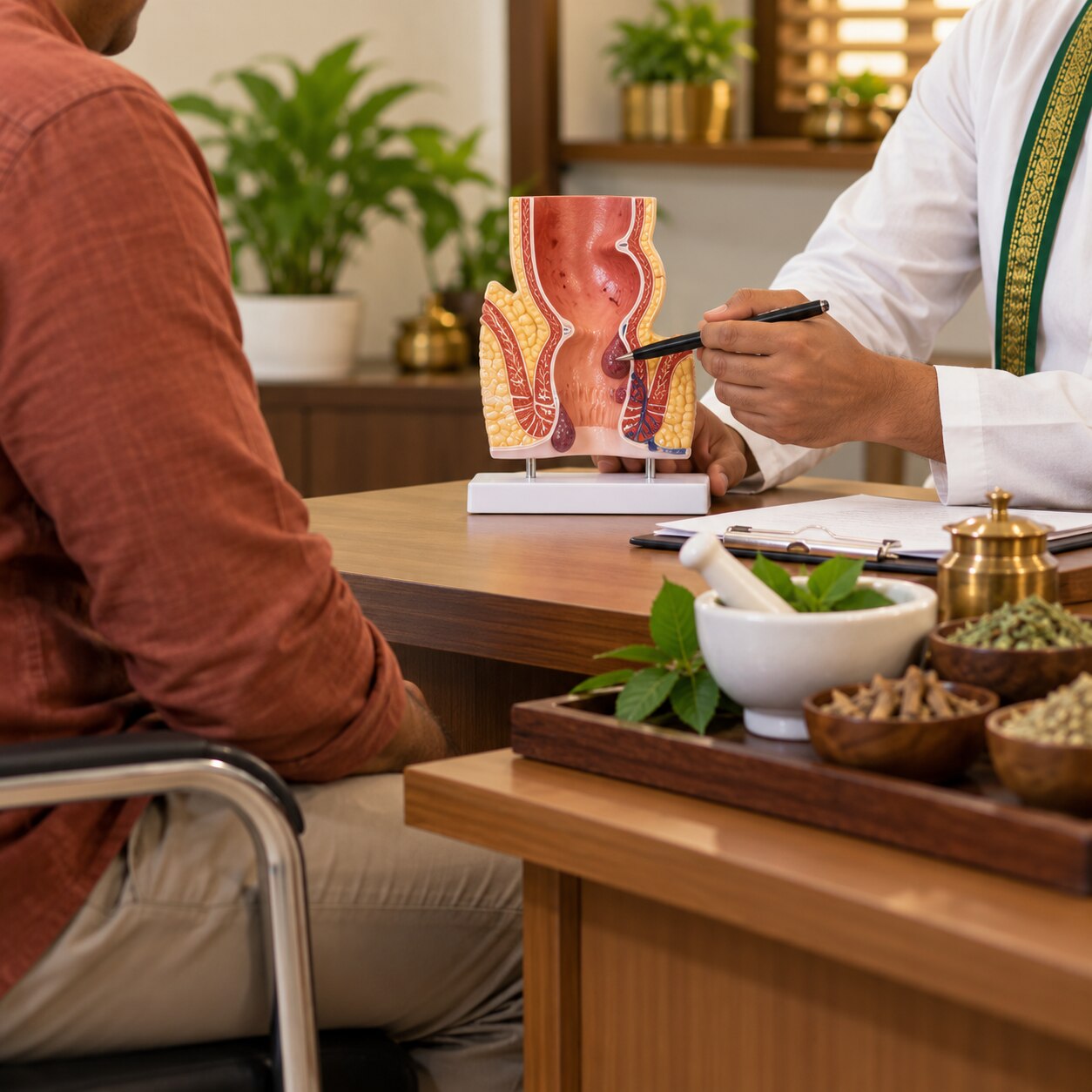
Blood, itching or a lump during bowel movements is not automatically piles. By the end, you will know which symptom patterns fit hemorrhoids, fissures, infection or skin irritation, which warning signs need urgent care, what to record before an examination, and when Ayurvedic treatment can be considered safely.
Key takeaways
- Bright-red blood does not prove you have piles.
- Seek urgent assessment for heavy bleeding, dizziness, severe pain or black stools.
- Record bleeding colour, pain, swelling, discharge and bowel changes.
- Consider Ayurvedic care only after serious causes have been assessed.
What could be causing bleeding, itching or swelling?
Bright-red blood is not proof of piles. Rectal bleeding causes include hemorrhoids, an anal fissure, inflammatory bowel disease, polyps and colorectal cancer. Piles symptoms overlap with several conditions, so the pattern of pain, swelling, discharge and bleeding matters.
| Condition | Clues that point towards it |
|---|---|
| Piles | Internal piles often cause painless bright-red blood or tissue protruding during a bowel movement. An external pile causes a tender lump; a sudden, very painful bluish lump may be thrombosed. |
| Anal fissure | A sharp, tearing pain during and after passing hard stool, with a small streak of bright-red blood on toilet paper. The pain can last for hours. |
| Anal fistula | A recurring opening or lump near the anus that leaks pus or blood, often after a previous abscess. Itching and intermittent drainage are common. |
| Abscess | Rapidly increasing, constant throbbing pain and swelling, with warmth, fever or pus. This needs prompt medical assessment. |
| Dermatitis | Itching, burning, redness or a moist rash around the anus, often without bleeding. Soap, wipes, sweat and leakage can irritate the skin. |
| Other causes | Blood mixed through stool, dark or black stool, diarrhoea, abdominal pain, weight loss or a change in bowel habit can indicate disease higher in the bowel. |
A clinician may need to inspect the area, perform a digital rectal examination and use anoscopy. Recurrent or unexplained bleeding needs assessment even when a visible pile is present.
Which symptoms need emergency assessment?
Emergency assessment is needed for heavy rectal bleeding, bleeding that does not stop, or blood that makes the bowl turn red. Go now if bleeding comes with dizziness, fainting, severe weakness, rapid heartbeat, or shortness of breath; these can signal significant blood loss.
Seek urgent care for black tarry stool, severe abdominal pain, fever, pus, or rapidly worsening anal swelling and pain. An anal abscess can worsen quickly and may need drainage; do not squeeze it or apply preparations to it. Inability to pass urine or stool also needs prompt assessment.
| Symptom or situation | Why routine piles care is unsafe | What to do |
|---|---|---|
| Heavy or continuous bleeding | Blood loss can become serious | Emergency department now |
| Black tarry stool | May indicate bleeding higher in the digestive tract | Emergency assessment today |
| Fever, pus, or increasing swelling | Suggests infection, including an anal abscess | Urgent medical review |
| Dizziness, fainting, or severe weakness | May reflect substantial blood loss or another serious problem | Emergency care now |
| Recurrent bleeding with weight loss, anaemia, changed bowel habits, or a cancer or inflammatory bowel disease history | Bright-red blood is not proof of haemorrhoids | Arrange prompt conventional evaluation |
Do not delay assessment to try Panchakarma or Ayurvedic products. A clinician should examine unexplained or persistent bleeding before complementary treatment, especially during pregnancy or after new bleeding later in adulthood.
What should you observe before seeing a clinician?
Record exactly what happens during and after each bowel movement, because the pattern is more useful than the word “piles.” Note when symptoms began, whether they recur, and whether constipation, straining or loose stools preceded them.
| Clue | What it may suggest | Detail to record |
|---|---|---|
| Bright red blood on toilet paper | Bleeding near the anus, including hemorrhoids or a fissure | Drops, streaks, or enough to colour the bowl |
| Blood coating stool | A source near the anal opening | Whether it appears only on the outside |
| Blood mixed into stool or dark red blood | Bleeding higher in the bowel | Whether the stool is black or tar-like |
| Pain during bowel movement | Fissure, irritated skin, thrombosed external hemorrhoid or infection | Cutting, burning, throbbing, or pressure; duration after passing stool |
| Tender lump or swelling | External hemorrhoid, abscess or another local problem | Colour, size, firmness, and whether it is enlarging |
| Prolapse | Tissue coming through the anus, often an internal hemorrhoid | Whether it returns by itself or needs gentle reduction |
Also note itching, mucus, pus, fever, and difficulty passing stool or urine. Photographing visible blood or swelling can help, but do not insert objects or repeatedly examine the area.
Tell the clinician about aspirin, anticoagulants, and every herbal or mineral preparation. Arrange prompt assessment for recurrent bleeding, even when it is bright red; seek urgent care for heavy bleeding, faintness, black stool, fever, pus, or rapidly worsening pain and swelling.
What can you do while waiting for assessment?
Keep stools soft and bowel movements brief. Increase dietary fibre gradually toward about 25–30 g daily from vegetables, fruit, whole grains, pulses or a fibre supplement, and drink enough fluids to prevent harder stools. A sudden fibre increase without fluids can cause bloating and worsen discomfort.
Use a warm sitz bath for 10–15 minutes after a bowel movement or when itching is troublesome. Pat the area dry rather than rubbing it, and wear loose, breathable underwear. Arrange assessment if bleeding persists or returns; fibre and bathing relieve symptoms but do not explain unexplained bleeding.
| Choice | How to use it | Avoid |
|---|---|---|
| Dietary fibre | Increase gradually toward 25–30 g daily | Do not add a large amount overnight |
| Fluids | Drink regularly so stools remain soft | Do not rely on fibre without adequate fluids |
| Toilet routine | Go when you feel the urge, relax your abdomen, and stop when finished | Avoid straining, prolonged sitting and phone use on the toilet |
| Sitz bath | Use warm, not hot, water for 10–15 minutes | Avoid very hot water, bubble bath and fragranced products |
| Cleaning | Rinse gently or use plain, unscented damp tissue, then pat dry | Avoid vigorous wiping, scratching and harsh soap |
| Medicines | Ask a clinician or pharmacist before using creams, suppositories or laxatives | Do not insert unverified herbal or mineral preparations, especially if bleeding continues |
When is Ayurvedic treatment for piles a reasonable choice?
Ayurvedic treatment for piles is reasonable only after a clinician has confirmed hemorrhoids and assessed the bleeding. Persistent or recurrent blood should not be attributed to a dosha imbalance without examination; you might need a rectal examination, blood count or endoscopy. Choose conventional evaluation first if you have:
- New rectal bleeding later in adulthood, unexplained weight loss, iron-deficiency anaemia, changed bowel habits, pregnancy, or a personal or family history of colorectal cancer or inflammatory bowel disease.
- Black or tarry stool, heavy bleeding, dizziness, fainting, fever, pus, rapidly increasing swelling, or difficulty passing stool or urine.
- A suddenly painful bluish lump, which can be a thrombosed external hemorrhoid rather than uncomplicated internal piles.
- Bleeding that continues despite softer stools and reduced straining.
For diagnosed grade I or II internal hemorrhoids, rubber-band ligation is an office option when symptoms persist. It generally provides more durable control than topical medication, but post-procedure pain or bleeding can occur. Surgery suits selected large, recurrent or advanced hemorrhoids, not every bleeding episode.
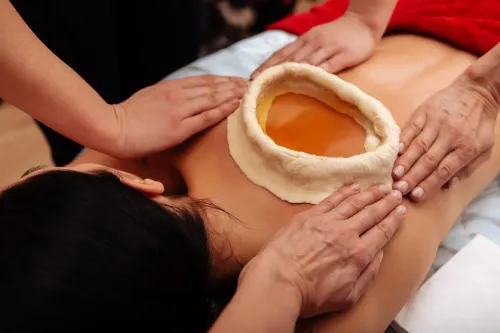
Panchakarma has no reliable high-quality evidence that it cures hemorrhoids or prevents colorectal disease. If you consult Omkar Ayurved, take your diagnosis and any test results, and ask how treatment will be monitored and when referral is needed. Do not apply Ayurvedic preparations to actively bleeding, ulcerated or infected tissue without examination.
Related services
Ayurvedic Treatment Ayurvedic Treatment For Piles/Fissure/Fistula Symptoms • Bleeding after passing a stool. • A pile may move down, outside of the anus . View service → |
Ayurvedic Treatment Constipation differs from person to person. For some people, it simply means infrequent stools, while on the other hand for others, constipation means hard... |
Frequently asked questions
Does bright-red blood confirm that I have piles?
No. Bright-red rectal bleeding can result from hemorrhoids, an anal fissure, inflammatory bowel disease, polyps or colorectal cancer. The pattern of pain, swelling, discharge and bleeding needs assessment.
Which symptoms need emergency assessment?
Heavy or persistent bleeding, dizziness or fainting, black stools, severe anal or abdominal pain, fever, or a rapidly worsening swelling require urgent medical assessment.
What should I observe before seeing a clinician?
Note the blood colour and amount, whether it coats the stool or appears on paper, pain during bowel movements, itching, swelling, discharge, constipation, diarrhoea and changes in bowel habits.
When is Ayurvedic treatment for piles a reasonable choice?
Consider Ayurvedic treatment after a clinician has assessed rectal bleeding and ruled out urgent or non-pile causes. A qualified Ayurvedic clinician can then select care based on your symptoms and examination.