Psoriasis is a chronic immune-mediated inflammatory disease, but several other conditions can produce similar-looking rashes. Before you begin an Ayurvedic program, confirm the diagnosis, identify warning signs and joint symptoms, and understand how the proposed care will fit with proven dermatology treatments.
Key takeaways
- Confirm psoriasis with a dermatologist before starting treatment.
- Seek urgent care for widespread redness, fever, severe pain, or joint swelling.
- Keep prescribed dermatology treatment while evaluating Ayurvedic care.
- Choose plans with clear ingredients, monitoring, and review dates.
Is the rash really psoriasis, and how urgent is it?
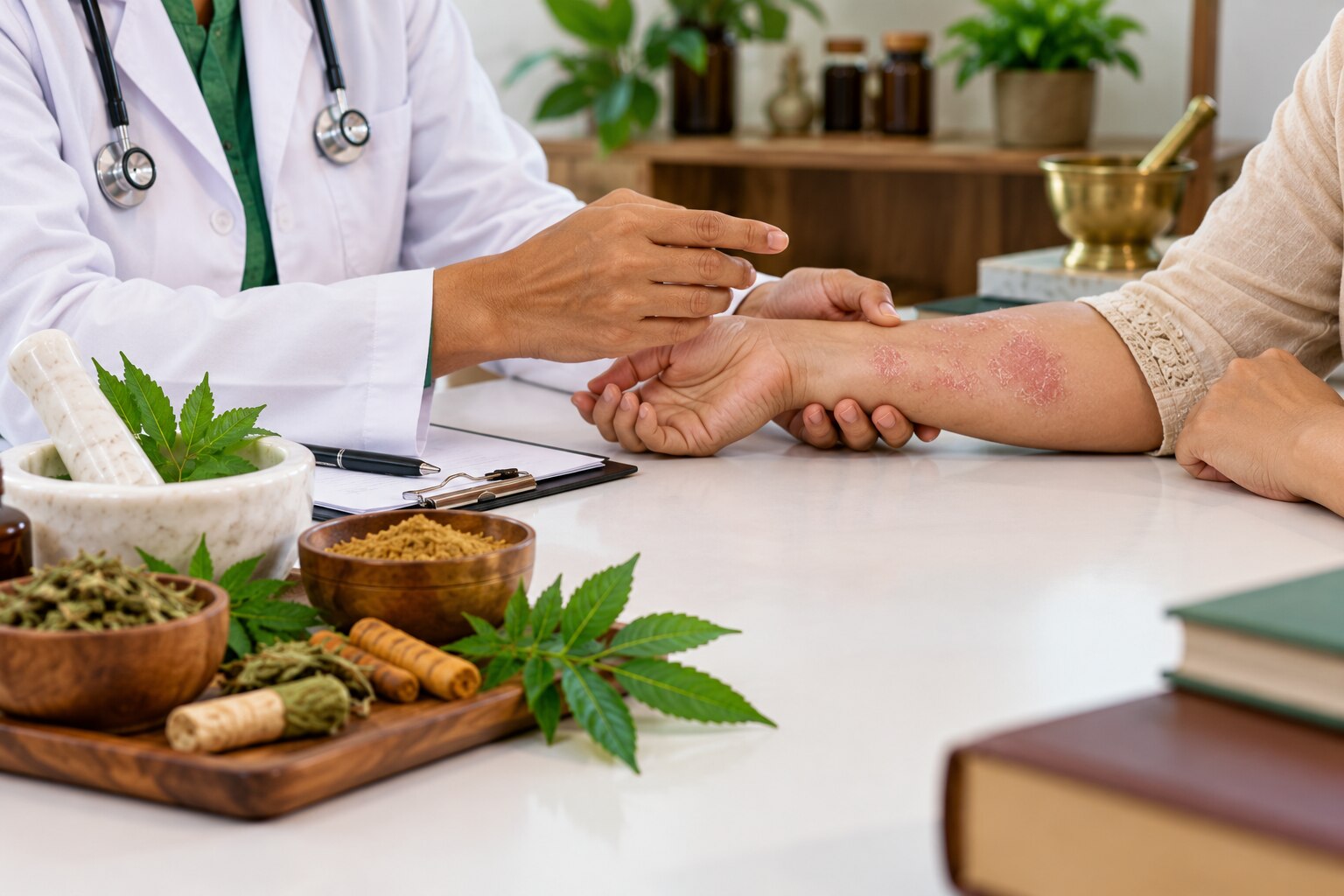
Psoriasis diagnosis is usually clinical: a dermatologist examines the scale, colour, distribution and nail changes. Psoriasis is a chronic immune-mediated inflammatory disease with relapses, so clear skin does not prove a permanent cure or remove the need for maintenance treatment. Its common patterns include:
| Pattern | Typical clue |
|---|---|
| Plaque psoriasis | Raised, well-defined scaly plaques |
| Guttate psoriasis | Numerous small, drop-like spots |
| Inverse psoriasis | Smooth, sore patches in skin folds |
| Pustular psoriasis | Pus-filled bumps with inflamed skin |
| Erythrodermic psoriasis | Widespread redness and skin shedding |
| Pattern | Clue that may point elsewhere |
|---|---|
| Eczema | Very itchy, dry or oozing patches |
| Seborrheic dermatitis | Greasy scale on the scalp, eyebrows or sides of the nose |
| Fungal infection | Expanding ring with a clearer centre |
| Allergic contact dermatitis | Rash after exposure to a product, metal or chemical |
| Scabies | Intense night-time itch with burrows or household spread |
| Pityriasis rubra pilaris | Orange-red areas with follicular bumps |
| Cutaneous T-cell lymphoma | Persistent, unusual patches that resist expected treatment |
These clues overlap, so an atypical rash or one that fails to respond as expected may need a skin scraping, blood test or biopsy. Seek urgent care for rapidly spreading redness, widespread pustules, skin shedding, fever, dehydration, severe pain or suspected erythrodermic psoriasis.
Arrange prompt assessment for new or widespread lesions, infection, facial or genital involvement, nail changes or joint pain.
Which psoriasis symptoms need assessment beyond the skin?
Severity is not measured only by body surface area. Affected skin on the face, genitals, palms, soles, scalp, nails or skin folds can impair seeing, walking, gripping, sleep or sexual comfort even when the affected area is small.
| Site | What can go wrong | Why assessment matters |
|---|---|---|
| Face or skin folds | Irritation and visible symptoms | Thin or moist skin may need gentler treatment |
| Palms or soles | Cracking, pain and difficulty walking or using your hands | Thick skin can require different treatment |
| Scalp | Scale, itch and hair disturbance | Topical treatment must reach the scalp safely |
| Nails | Pitting, separation or thickening | Nail psoriasis can resemble fungal disease and can accompany joint inflammation |
| Genitals | Pain and sexual discomfort | Irritation from standard treatments can worsen symptoms |
NICE recommends specialist assessment when psoriasis affects more than 10% of your body surface area, topical treatment is ineffective or unacceptable, or distress or disability is substantial. Do not postpone that assessment for a lengthy cleansing course.
Report these psoriatic arthritis symptoms promptly:
- Morning stiffness
- Swollen fingers or toes
- Heel pain
- Persistent back pain
Early evaluation matters because untreated joint inflammation can cause permanent damage. Also tell your clinician about nail changes, depression, high blood pressure, diabetes, obesity, high cholesterol, smoking, bowel pain, persistent diarrhoea or blood in the stool.
These cardiometabolic and inflammatory bowel concerns affect treatment decisions, so extensive disease or joint inflammation needs timely specialist care rather than delayed cleansing.
What does Ayurvedic psoriasis care involve in practice?
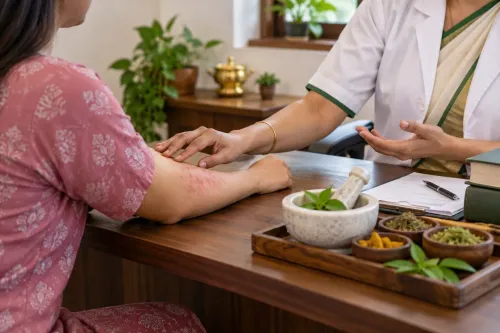
A responsible consultation for Ayurvedic treatment for psoriasis begins with a documented history and skin examination, not an automatic cleansing package. The clinician should discuss:
- Your symptoms, triggers, flare pattern, affected sites and treatment goals.
- Current medicines, Ayurvedic medicines, allergies, pregnancy plans, liver or kidney disease, and infection risks.
- Examination findings, including photographs and the percentage of body surface affected.
A plan for long-term psoriasis management may combine topical oils or other preparations, oral medicines, diet changes, monitoring and scheduled follow-ups. Ask how progress will be measured: changes in photographs, affected body-surface area, itch, sleep disruption and flare frequency.
Ask when the plan will change if it fails; a single cleansing event is not relapse prevention.
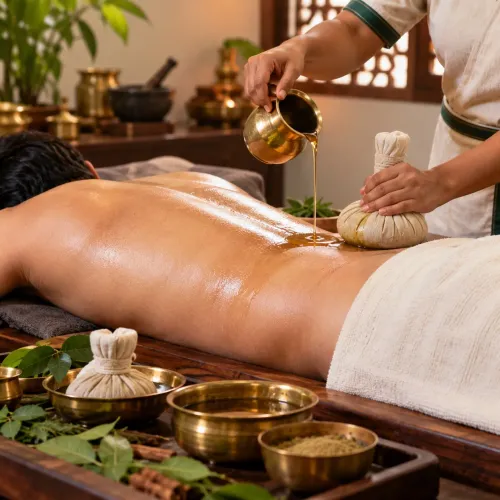
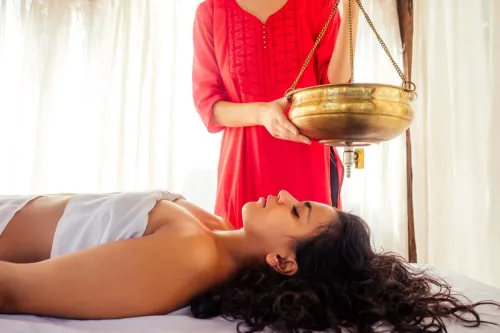
Ayurveda and Panchakarma have not been established as substitutes for evidence-based psoriasis treatment. Available studies have small samples, variable formulations and limited long-term follow-up. Induced vomiting, purgation, enemas and fasting can cause dehydration, electrolyte disturbance, aspiration, rectal injury and interactions with prescribed medicines.
Before taking any product, request its complete ingredient list, manufacturer, batch number and credible contaminant-testing results. “Natural” does not rule out lead, mercury, arsenic or undeclared corticosteroids. Stop and seek medical advice for worsening skin, severe weakness, vomiting, confusion or signs of infection.
How should Ayurvedic care fit with dermatology treatment?
Do not replace an effective psoriasis medicine with Ayurvedic care without speaking to the prescribing clinician. Ayurveda alongside dermatology treatment can be complementary, but it has not been established as a substitute for proven treatment.
| Option | Main role |
|---|---|
| Emollients | Reduce scaling, dryness and cracking |
| Topical corticosteroids | Suppress local inflammation |
| Vitamin D analogues | Control plaques, often with another topical |
| Phototherapy | Treat more extensive or treatment-resistant disease |
| Methotrexate | Systemic treatment requiring monitoring |
| Cyclosporine | Rapid systemic control for selected severe disease |
| Acitretin | Oral retinoid for selected patients; unsuitable in pregnancy |
| Biologic medicines | Target specific immune pathways in moderate or severe disease |
Treatment choice depends on severity, body site, comorbidities, infection risk, pregnancy plans and personal preference. Moderate or severe psoriasis and psoriatic arthritis need timely evidence-based control because untreated inflammation can permanently damage joints and affect health beyond the skin.
1. Keep taking corticosteroids, biologics, methotrexate or other prescribed medicines unless your prescriber changes the plan. Stopping systemic corticosteroids abruptly can cause severe rebound disease, including generalized pustular or erythrodermic psoriasis. Plan every dose reduction with the prescribing clinician.
2. Give your dermatologist or pharmacist the complete list before adding oils, powders, tablets, decoctions or proprietary mixtures. Herbs can alter bleeding, blood pressure, blood glucose, sedation and drug metabolism.
3. Request extra review before surgery and during pregnancy, breastfeeding, liver disease or kidney disease. Also report joint pain, morning stiffness, swollen fingers or toes, heel pain or persistent back pain, which can indicate psoriatic arthritis.
How can you judge whether an Ayurvedic plan is suitable for long-term use?
A suitable long-term plan is transparent, measurable and easy to revise when it fails. It should manage a relapsing condition, not promise a permanent cure after one cleanse.
Before agreeing to an Ayurvedic psoriasis consultation, ask for:
- A written diagnosis, the treatment goal and the proposed duration.
- Every ingredient, dose, route and frequency, plus the product manufacturer, batch number and expiry date.
- Review intervals for treatment monitoring, with measurable success criteria such as photographs, affected body-surface area, itch, sleep and flare frequency.
- Written instructions for side effects, interactions and urgent contact.
- A fallback plan if lesions spread, treatment fails or you develop joint symptoms.
Record baseline photographs, affected sites, body-surface involvement, itch severity, sleep disruption, nail changes, morning stiffness or other joint symptoms, current prescriptions, allergies, and liver, kidney, pregnancy and infection considerations. This record shows whether the plan is helping rather than relying on memory.
Rapid dramatic clearing followed by burning, easy bruising, acne-like lesions, skin thinning or severe rebound needs medical review. Do not interpret these signs as proof of purification; undeclared corticosteroids or other medicines can produce this pattern. Clearing after a short cleanse does not prove relapse prevention.
Psoriasis commonly requires psoriasis maintenance treatment after the skin improves.
Omkar Ayurved can be considered for safe integrative care when its clinician reviews existing treatment, respects referral needs and does not delay dermatology assessment or proven therapies.
Related service
Ayurvedic Treatment “Kushta” is a wide term used for various disorders. Skin disorders are mostly due to the intrinsic toxins formed in the body which are because of... View service → |
Frequently asked questions
How can you tell whether a rash is really psoriasis?
A dermatologist assesses the scale, colour, distribution, nail changes, and overall pattern because eczema, fungal infections, and other conditions can resemble psoriasis.
Which psoriasis symptoms need assessment beyond the skin?
Report joint pain, stiffness, swelling, nail changes, widespread redness, fever, or rapidly worsening symptoms for timely medical assessment.
What does Ayurvedic psoriasis care involve in practice?
Care can include an individual consultation, dietary and routine guidance, prescribed Ayurvedic medicines, skin care, and Panchkarma procedures when clinically appropriate.
How should Ayurvedic care fit with dermatology treatment?
Tell every clinician about all medicines and procedures, avoid stopping prescribed treatment without advice, and use scheduled reviews to track skin, joint symptoms, and side effects.