Neck or back stiffness can come from muscle and joint strain, a disc problem, nerve compression, inflammatory spinal disease, or a more serious condition, so the treatment plan must begin with the cause rather than the label “spondylitis.” You will learn which symptoms need medical assessment, what an Ayurvedic consultation may examine, how procedures such as oil application, heat therapy and Nasya are selected, and how progress can be reviewed safely.
Key takeaways
- Identify whether pain is mechanical, nerve-related, cervical, or lumbar.
- Request a clinical assessment before choosing Nasya or Panchkarma.
- Choose procedures based on symptoms, examination findings, and treatment goals.
- Track pain, movement, sleep, and warning signs throughout care.
Which type of neck or back problem could be causing your symptoms?
Neck spondylitis is not one diagnosis. Mechanical cervical spondylosis causes neck stiffness and pain from age-related joint or disc changes; lumbar spondylosis affects the lower back. Cervical radiculopathy means a neck nerve root is irritated, so pain, tingling or weakness travels into an arm. Low-back pain travelling down a leg suggests sciatica.
| Condition | Plain-language clue | What it may indicate |
|---|---|---|
| Mechanical cervical spondylosis | Local neck pain, stiffness, reduced turning | Wear-related joints or discs |
| Lumbar spondylosis | Local low-back ache, worse with loading | Mechanical lower-back change |
| Cervical radiculopathy | Neck pain with arm tingling or weakness | Nerve-root involvement |
| Sciatica | Low-back pain running into the buttock or leg | Irritated lumbar nerve |
| Thoracic pain | Pain between the shoulder blades or around the ribs | Mid-back muscle, joint, rib or nerve problem |
| Axial spondyloarthritis | Inflammatory back or buttock pain | Spinal inflammation needing assessment |
Seek medical assessment for possible inflammatory disease if symptoms began before age 45, last longer than three months, wake you in the second half of the night, or improve with movement. Buttock pain, psoriasis, inflammatory bowel disease, uveitis or a close relative with spondyloarthritis strengthens that concern.
Get prompt conventional evaluation for new limb weakness, saddle numbness, loss of bladder or bowel control, fever, unexplained weight loss, severe unremitting night pain, major trauma or a history of cancer. Do this before booking Panchkarma. A lumbar spondylosis treatment Ayurvedic approach should follow diagnosis, not replace urgent neurological or inflammatory assessment.
What should be checked before an Ayurvedic plan is chosen?
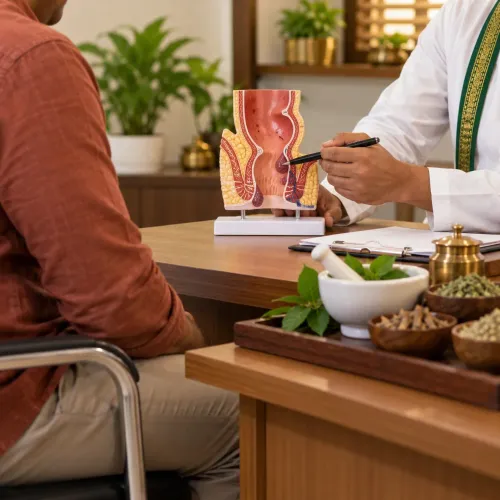
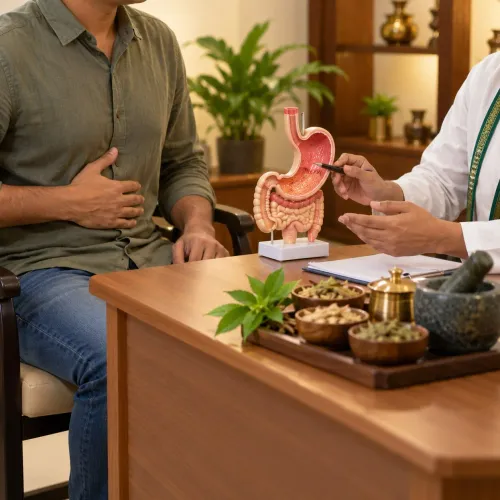
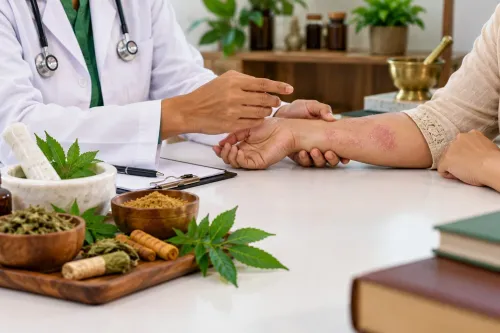
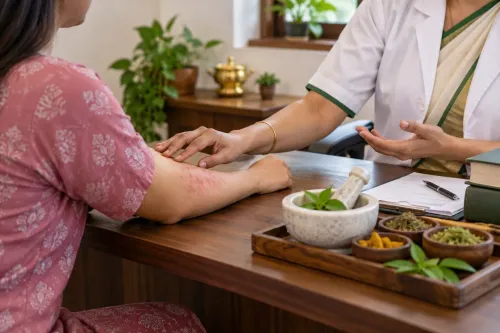
A useful spondylitis assessment starts with the pattern of symptoms, not the label alone. An Ayurvedic consultation for back pain should record the exact pain location, duration, morning-stiffness duration, range of motion, sleep disruption, posture, work setup, driving, lifting and other activities that aggravate it.
1. Ask whether pain travels into an arm, chest, buttock or leg, and whether you have numbness, pins and needles, poor balance, reduced grip, leg weakness or limited walking tolerance. Examination should include strength, reflexes, sensation and movement, because radiating pain or an abnormal reflex changes the safety of a passive treatment plan.
2. Bring existing reports and images. An X-ray for neck pain can show alignment, fractures, disc-space narrowing and osteophytes, but it cannot show every nerve or soft-tissue problem.
An MRI for back pain can show discs, nerves, the spinal cord, and inflammatory or infective changes; a finding on the scan does not automatically explain your pain.
3. Blood tests can help investigate infection or inflammatory disease, but they do not diagnose ordinary mechanical stiffness by themselves. Imaging is not automatically needed for uncomplicated neck or low-back pain; it becomes more useful when serious disease is suspected or the result will change management.
The practitioner should question a report phrase such as “wear and tear” and identify the diagnosis behind it. That spondylitis assessment should guide care, rather than the scan phrase alone.
How might treatment be personalised instead of using one Panchkarma package?
Treatment intensity should follow examination findings and your wider health, not the label “Panchkarma for spondylitis.” Personalised Ayurvedic treatment starts by checking age, strength, sleep, digestion, bowel habits, previous injury, work posture, current medicines, pregnancy, and kidney, liver, heart or gastrointestinal conditions.
1. Begin with consultation, activity advice, workstation changes and graded movement. The plan should account for whether pain is acute or persistent, and should record movement, strength, sleep and daily-function limits.
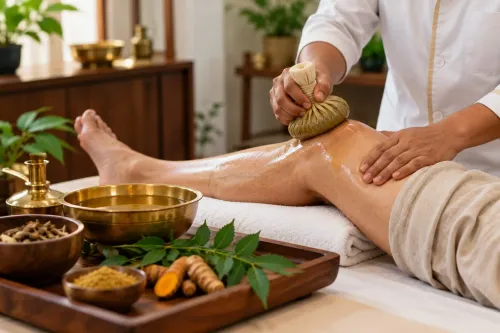
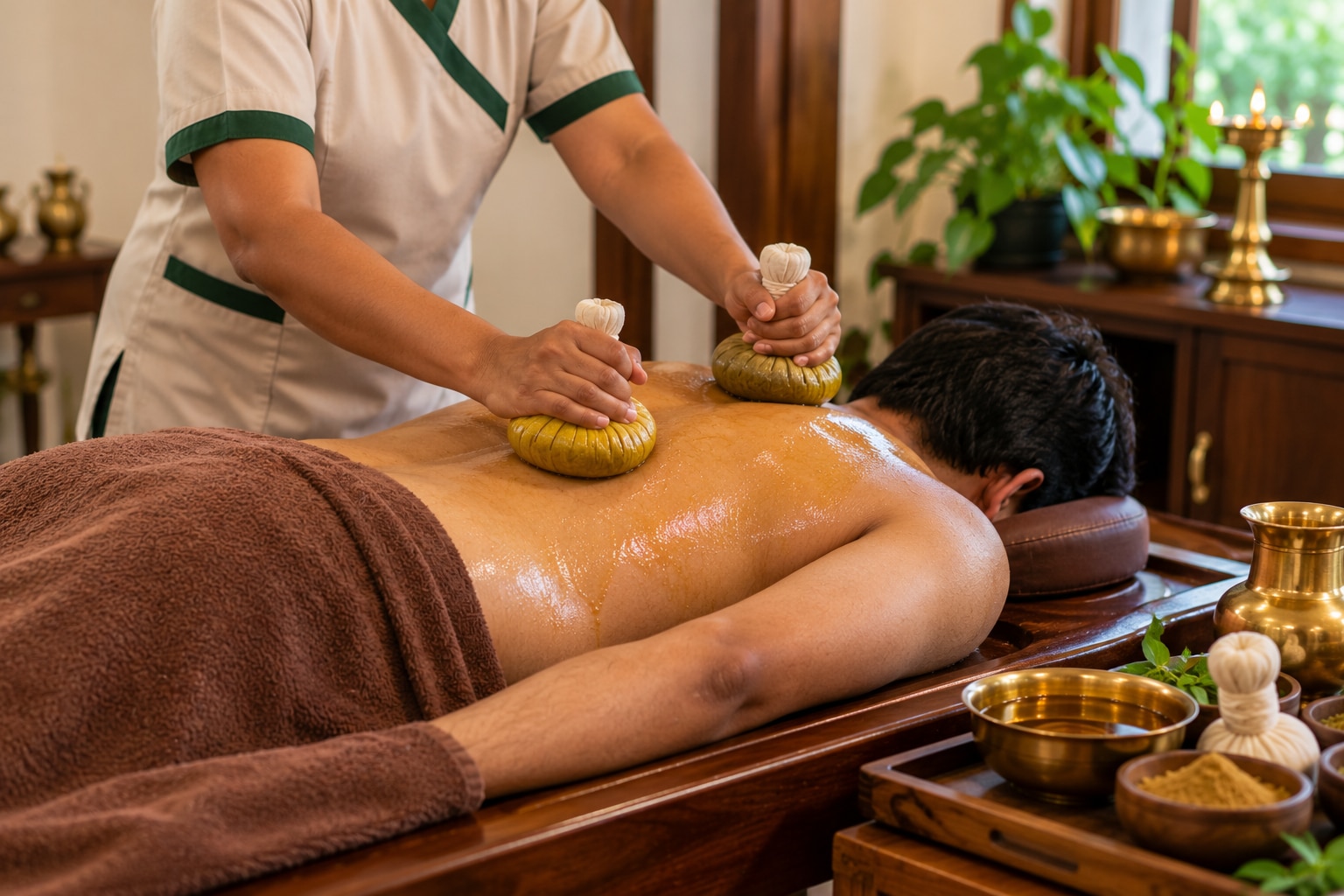
2. Add care in stages when appropriate: local oil application, Abhyanga or Snehan, Swedana or another heat-based procedure, selected manual care, and a scheduled review. Heat or massage may ease guarding, but passive care must not replace strengthening and daily activity; prolonged bed rest worsens deconditioning.
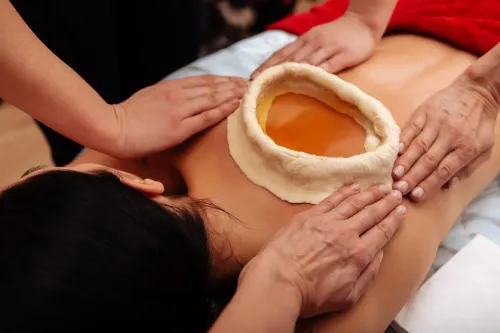
3. If Kati basti or Greeva basti is proposed, ask for the oil name, temperature, duration and frequency. These procedures retain warm oil over the low back or neck inside a dough ring, but none of those details is automatically standard. Ask how skin burns and reactions will be prevented.
4. Include exercise or physiotherapy referral when weakness, radiating pain or restricted movement is present. If cleansing or internal medicine is proposed, ask why it fits your diagnosis and request its risks, ingredients, dose and monitoring plan, especially with pregnancy or kidney, liver, heart or gastrointestinal disease.
Review the plan if symptoms worsen or function declines.
When could Nasya or local procedures be considered for neck stiffness?
Nasya for neck pain should be considered only after deciding that the complaint fits a suitable head-and-neck symptom, rather than treating every stiff neck with nasal medicine. It is not a universal treatment for cervical pain.
- Ask the practitioner to name the exact substance, quantity, patient position, nasal preparation and observation period for the Nasya procedure safety plan.
- Expect nasal or throat sensations, medicinal taste, mild irritation or fluid draining afterwards. Stop the procedure and seek assessment for severe coughing, breathing difficulty or choking.
- Avoid Nasya when aspiration risk is present, and reconsider it during an acute nasal infection.
- Compare the plan with Greeva basti, massage or heat. Local oil retention, massage and heat may temporarily reduce muscle guarding or perceived stiffness, but they cannot decompress a nerve, stabilise an injured spine, treat infection, heal a fracture or control inflammatory spinal disease.
- Ask for temperature, duration and skin-protection measures before Greeva basti or Kati basti. Warm oil held over the neck or low back is not a standardised treatment.
Internal oils, herbal preparations, purgation and therapeutic enemas require separate screening. Tell the practitioner about pregnancy, dehydration, frailty, anticoagulant use, and kidney, liver, cardiovascular or gastrointestinal disease before accepting them. A procedure-specific safety review matters because Panchkarma is not one treatment with one risk profile.
How should you judge whether the plan is helping and whether the provider is responsible?
A useful plan earns continuation by showing measurable change, not by promising a cure. At each spondylitis treatment review, record pain on a 0–10 scale, neck or back movement, morning-stiffness duration, sleep quality, sitting or walking tolerance, grip or leg strength, and changes in numbness.
| Finding | Continue and adjust | Stop and refer |
|---|---|---|
| Less pain with better movement | Review exercise, activity and procedures | — |
| No change after the agreed review period | Recheck diagnosis and treatment | Seek another medical assessment |
| New weakness, declining function or worsening numbness | — | Prompt neurologist or orthopaedic review |
| Bladder or bowel symptoms, fever or severe night pain | — | Urgent conventional medical evaluation |
Ayurvedic care may support symptom relief, muscle relaxation and function; it should not promise to restore narrowed discs, remove osteophytes or cure ankylosing spondylitis. A safe Panchkarma consultation includes referral when symptoms exceed the scope of passive care, plus graded movement or physiotherapy rather than prolonged bed rest.
Before booking Ayurvedic spondylitis treatment Pune services, ask Omkar Ayurved or any provider:
- What are the exact name, ingredients, dose, manufacturer and batch details of each product, including Ayurvedic medicines for back pain?
- What interactions and adverse effects will be monitored? “Natural” does not guarantee safety; some products have contained lead, mercury or arsenic.
- Who will review scans and medicines, control procedure temperature and skin safety, and prescribe exercise?
- When will a neurologist, orthopaedic specialist, rheumatologist or physiotherapist be involved?
Related service
Ayurvedic Treatment Spondylits/Sciatica/Vertebral Coloumn Disorder Ayurvedic Treatment For Spondylits/Sciatica/Vertebral Coloumn Disorder Spondilitis is the result of an inflammation of the vertebral joints. View service → |
Frequently asked questions
Which type of neck or back problem could be causing your symptoms?
Neck spondylosis causes local stiffness and pain, while cervical radiculopathy sends pain, tingling, or weakness into an arm. Lumbar spondylosis affects the lower back, and sciatica sends pain down a leg.
What should be checked before an Ayurvedic plan is chosen?
Ask for a clinical history and examination covering pain location, movement, strength, sensation, reflexes, onset, injury, and warning signs. Imaging or referral may be needed when symptoms suggest nerve compression or another serious cause.
How might treatment be personalised instead of using one Panchkarma package?
A responsible plan matches procedures, duration, frequency, medicines, exercises, and follow-up to your symptoms, examination findings, health history, and response to treatment.
When could Nasya or local procedures be considered for neck stiffness?
A qualified practitioner may consider them after assessing the cause and excluding problems needing urgent medical care. Do not use them as a substitute for evaluation of weakness, significant numbness, trauma, or severe worsening pain.
How should you judge whether the plan is helping and whether the provider is responsible?
Track pain, stiffness, movement, sleep, medication use, and arm or leg symptoms. Expect documented goals, informed consent, clear instructions, follow-up dates, and prompt referral when symptoms worsen or warning signs appear.