A painful or stiff joint does not identify its cause, and the safest treatment plan depends on whether the problem involves wear, inflammation, crystals, injury or the spine. By the end, you will know what an Ayurvedic assessment should examine, which therapies may fit different presentations, what safety checks matter and how to measure progress in daily activities.
Key takeaways
- Ask about joint pattern, morning stiffness, swelling and movement-related changes.
- Choose treatment according to symptoms, diagnosis, inflammation and overall health.
- Check medicines, allergies, blood tests and red flags before Panchkarma or herbal care.
- Track walking, dressing, stairs and morning stiffness to measure functional change.
What should an Ayurvedic arthritis assessment establish first?
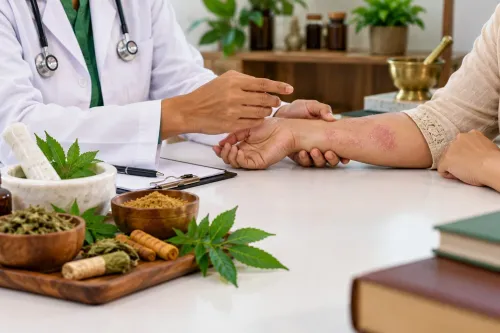
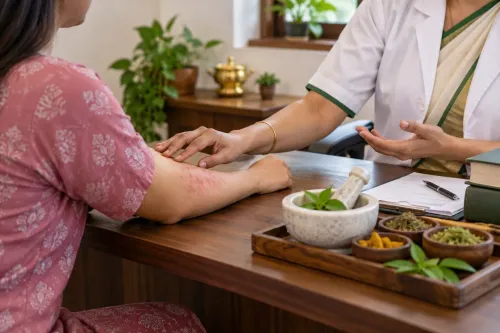
An Ayurvedic arthritis assessment should establish the cause and urgency of your symptoms before treatment is chosen. A clinician should ask which joints hurt, when symptoms began, whether morning stiffness lasts 30 minutes or several hours, whether swelling is visible, and whether movement or rest changes it.
The examination should include a range of motion assessment, gait, grip, limb strength, and tasks such as climbing stairs, dressing, opening containers and rising from a chair. Record sleep, digestion, appetite, bowel habits, previous diagnoses, injuries, scans, blood tests and every current medicine.
Knee pain does not establish one diagnosis. A joint pain diagnosis must distinguish among possibilities:
| Cause | Clues that need assessment | Why it changes care |
|---|---|---|
| Osteoarthritis | Activity-related pain and brief stiffness | Focus differs from inflammatory disease |
| Inflammatory arthritis | Several swollen joints and stiffness lasting hours | Delayed treatment can cause joint damage |
| Gout | Sudden, severe pain and swelling | Crystal inflammation needs specific care |
| Tendon problem | Pain linked to a particular movement | The tendon, not the joint, may be affected |
| Referred pain | Pain felt away from its source | The spine or another area may require examination |
Seek prompt conventional medical evaluation for:
- A hot, red, suddenly swollen joint, fever with joint pain, inability to bear weight, or a significant recent injury
- Unexplained weight loss, new weakness or numbness, or loss of bladder or bowel control
- Several swollen joints with prolonged morning stiffness
Ayurvedic pattern assessment belongs alongside, not instead of, identifying infection, fracture, gout or inflammatory disease.
How should treatment choices differ between common arthritis presentations?
Treatment must match the cause and urgency, not just the location of pain or stiffness.
| Presentation | Practical priority | Ayurvedic role and caution |
|---|---|---|
| Wear-related knee osteoarthritis | Osteoarthritis treatment centres on strengthening, aerobic or aquatic exercise, weight management when relevant, and a plan for symptom relief. | Oil massage or warmth may help you participate by easing stiffness, but neither restores cartilage. |
| Suspected rheumatoid arthritis or inflammatory polyarthritis | Swollen joints, prolonged morning stiffness and fatigue require rheumatology assessment. Delayed DMARD therapy can allow irreversible joint damage. | Ayurvedic care may complement prescribed DMARDs; it must not replace rheumatology care or disease-modifying treatment. |
| Acute gout flare | Acute gout flare management requires evaluation of sudden severe pain and swelling, with treatment directed at crystal-driven inflammation. | Avoid assuming vigorous massage, heating procedures or unsupervised cleansing are suitable during the flare. |
| Spine-related symptoms | Examination must check for nerve involvement. | Seek prompt medical care for weakness, numbness, or bladder or bowel changes. |
A plan suited to stable stiffness becomes unsafe when swelling, infection, fracture or acute inflammation is possible. A hot, red joint or fever with joint pain needs prompt evaluation rather than routine massage. The same applies to sudden inability to bear weight after injury.
Your Ayurvedic plan should therefore change with the presentation: supportive care for one person can be unsuitable for another. Warmth and gentle movement may support osteoarthritis participation, while an acutely inflamed joint requires a different priority.
Which Ayurvedic therapies may support mobility, and what safety checks matter?
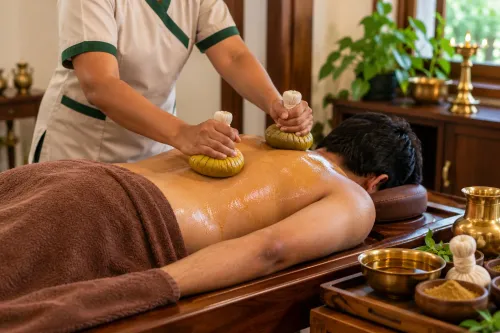
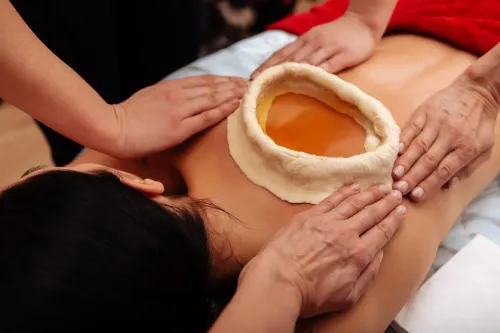
Therapy is selected from your findings, not delivered as a fixed package. A plan may combine oil application or massage, local warmth, dietary changes, graded movement, exercise, physiotherapy, internal medicines or Panchakarma for arthritis.
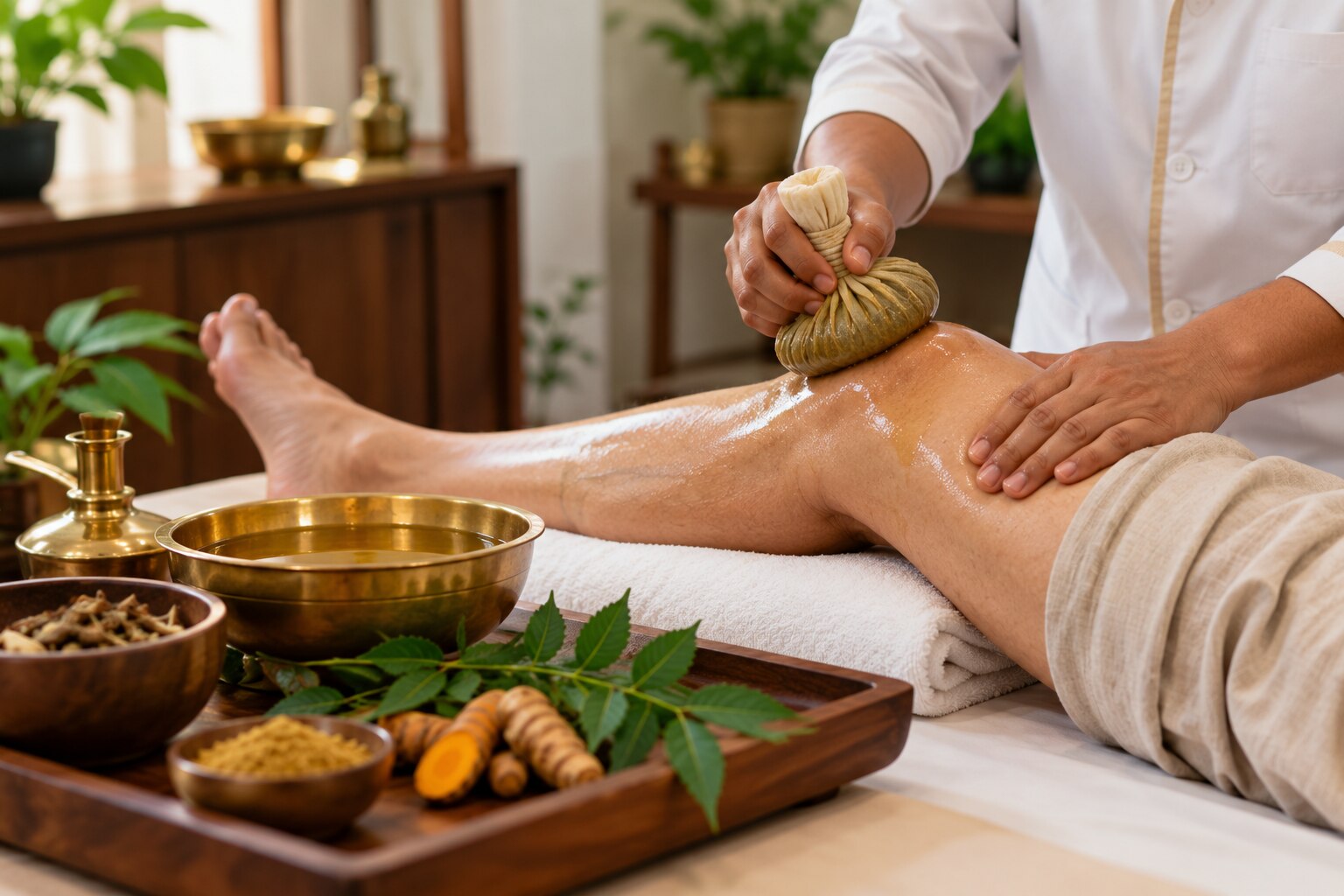
Abhyanga and joint stiffness may be addressed with warm oil for short-term comfort, but this does not restore cartilage or prevent osteoarthritis progression.
| Therapy | Possible role | Important limit |
|---|---|---|
| Warm oil or massage | Ease stiffness and discomfort | Supportive relief, not structural repair |
| Exercise or physiotherapy | Build strength and preserve daily function | Must match pain, swelling and ability |
| Dietary changes | Address weight, nutrition or digestive concerns | Does not replace arthritis treatment |
| Internal medicine | Target an individualised plan | Requires interaction and product checks |
| Panchakarma | A procedure-based programme | Not one standard arthritis protocol |
Panchakarma may include massage, sweating or heat, enemas, purgation, vomiting or other procedures. Purgation, vomiting and enemas can cause dehydration and electrolyte disturbances, so review age, pregnancy, frailty, kidney or heart disease, gastrointestinal illness and concurrent medicines before proceeding.
Ayurvedic medicines safety also requires the exact product name, ingredients, dose, manufacturer, batch number and testing information. Some products have contained lead, mercury or arsenic.
Review anticoagulants, diabetes medicines, blood-pressure drugs, corticosteroids and DMARDs before adding herbs. Boswellia arthritis evidence concerns particular studied extracts, not every Shallaki product. Treat medicines and procedures as supervised, individual choices—not guaranteed parts of care.
How can you tell whether treatment is improving daily function?
Treatment is improving daily function when you can do more, for longer, with less assistance—not simply when pain falls after a session. For arthritis mobility tracking, record morning-stiffness duration in minutes, walking distance, time spent standing, number of stairs, grip tasks, dressing, bathing, sitting-to-standing, sleep interruptions and the joint’s measured range of motion.
| Measure | How to record it | What improvement looks like |
|---|---|---|
| Walking | Use the same route and timing | Farther distance or fewer pauses |
| Transfers | Use a timed chair-rise test from the same chair | More repetitions or faster completion |
| Knee or hip symptoms | Complete the WOMAC index | Separate changes in pain, stiffness and physical function |
| Movement | Measure the same joint’s range of motion | Greater movement without forcing the joint |
A timed walking test adds another comparable result. Repeat each task at follow-up using the same distance, chair, instructions and timing; changing the test can create an improvement on paper.
Check the programme’s workload before committing:
- How often are consultations and follow-up reviews scheduled?
- What home routine is required?
- How long does each oil or heat procedure take?
- Does the plan include strengthening, exercise or physiotherapy?
Improvement is more credible when you maintain strengthening, climb stairs, walk farther or sleep better. Keep symptoms, swelling, medicine changes and activity in a record for several weeks, then review it with the clinician. Do not stop prescribed treatment because one measure improves, or attribute every change to one oil, herb or procedure.
What should you ask an Ayurvedic centre before starting care?
Choose a centre that treats diagnosis and safety as part of the plan, not as paperwork after treatment begins. Your Ayurvedic consultation questions should establish whether the clinician will review your conventional diagnosis, imaging, blood tests and complete medicine list, including anticoagulants, diabetes medicines, blood-pressure drugs, corticosteroids and DMARDs.
Ask these questions before agreeing to care:
- What changes if a joint becomes hot, red or suddenly swollen, or if fever, inability to bear weight, new weakness or numbness appears?
- Do I need coordination with a rheumatologist, orthopaedic doctor or physiotherapist?
- Who supervises each Panchakarma procedure, and what preparation and recovery will it require?
- What testing is available for internal medicines, including the product name, ingredients, manufacturer and batch number?
A written plan should name every therapy, frequency, duration, home exercise, follow-up date and criteria for changing or stopping treatment. Ask how progress will be measured through walking, chair-rise, stairs, grip, sleep, range of motion or the WOMAC index, rather than pain alone.
| Question | A useful answer includes | Warning sign |
|---|---|---|
| Diagnosis | Review of records and medicines | One package for every arthritis type |
| Safety | Clear escalation and medical coordination | Advice to stop prescribed treatment |
| Results | Repeatable functional measures | Pain score only |
At Omkar Ayurved, Pune, these checks support individualized arthritis care and help you judge Ayurvedic hospital safety when comparing Ayurvedic arthritis treatment Pune options.
Related services
Ayurvedic Treatment Arthritis/Joint Related Disease Ayurvedic Treatment For Arthritis/Joint Related Disease It is not a disease but it is one of the symptoms of sandhi vata, amvat, vatarakta, jirna... View service → |
Panchkarma Best Abhyanga/Snehan Treatment in Pune Panchakarma means the five ‘kriyas’, which is to purify and eliminate the impurities from the body. View service → |
Frequently asked questions
What should an Ayurvedic arthritis assessment establish first?
It should identify the affected joints, symptom duration, morning-stiffness length, swelling, movement or rest-related changes, previous diagnoses, medicines and warning signs that need medical referral.
How should treatment choices differ between common arthritis presentations?
Treatment should reflect the presentation: wear-and-tear symptoms, inflammatory patterns, an acute swollen joint and pain after injury require different assessment and care rather than one standard protocol.
Which Ayurvedic therapies may support mobility, and what safety checks matter?
An Ayurvedic clinician may consider personalised medicines, external therapies or Panchkarma after assessment. Ask about contraindications, medicine interactions, allergies, pregnancy, infection, surgery and required monitoring.
How can you tell whether treatment is improving daily function?
Record morning-stiffness duration, walking distance, stair use, dressing, gripping and sleep. Compare the same activities at regular intervals instead of relying only on pain scores.
What should you ask an Ayurvedic centre before starting care?
Ask who will assess you, what diagnosis is being considered, which treatment is proposed, how it will be monitored, what side effects require help, and when referral to a rheumatologist or orthopaedic clinician is needed.