Stiffness after unusual exertion is different from a knee that stays swollen, gives way, locks, or makes walking progressively harder. You will learn which symptoms need urgent assessment, which examinations and tests clarify the cause, and how to judge whether Ayurvedic care belongs alongside rehabilitation or other medical treatment.
Key takeaways
- Seek urgent assessment for a hot, swollen knee, fever, injury, or inability to bear weight.
- Book a clinical appointment when stiffness persists or walking becomes harder.
- Consider Ayurvedic care after diagnosis, especially alongside a clear monitoring plan.
- Track pain, swelling, walking distance, and treatment effects before continuing.
Which knee symptoms need urgent medical assessment?
Activity-related knee pain with morning stiffness lasting no more than 30 minutes and no swelling can fit a clinical osteoarthritis pattern in adults aged 45 and over. Persistent knee stiffness or worsening difficulty walking still needs a clinical appointment, even when symptoms began after exercise or a long walk.
| Pattern | What it suggests | What to do |
|---|---|---|
| Mild pain after activity, no swelling, stiffness up to 30 minutes | Possible osteoarthritis pattern | Arrange routine assessment if it persists |
| Persistent or worsening difficulty walking | A condition needing diagnosis | Book a clinical appointment |
| Hot visibly swollen knee with fever, chills, or feeling acutely unwell | Possible joint infection | Seek urgent medical assessment |
| Sudden severe pain, inability to bear weight, marked deformity, locked knee, or pain after significant injury | Possible fracture or major ligament or meniscus injury | Seek urgent assessment and imaging |
Do not arrange massage, oil application, fomentation, or Panchakarma before urgent evaluation when infection, fracture, or major ligament or meniscus injury is possible. Locked knee pain can reflect internal damage rather than ordinary stiffness.
Seek emergency care for calf swelling with chest pain, breathlessness, or coughing blood. This combination can indicate a blood clot that has travelled to the lungs. A hot swollen knee, fever, chills, or acute illness also needs prompt attention because infection can rapidly damage the joint.
What could persistent stiffness and walking difficulty indicate?
Persistent stiffness and difficulty walking have several causes, so a clinician first separates osteoarthritis from inflammatory disease, injury, infection, and pain arising elsewhere. Persistent symptoms should not automatically be labelled a dosha imbalance.
| Condition | Clues | Test or assessment |
|---|---|---|
| Osteoarthritis | Activity-related pain, stiffness lasting no more than 30 minutes, crepitus | Clinical osteoarthritis knee diagnosis; weight-bearing X-rays if atypical |
| Rheumatoid or other inflammatory arthritis | Prolonged morning stiffness, warmth, or several swollen joints | Blood tests and joint examination |
| Gout | Sudden severe pain, redness, and swelling | Joint-fluid analysis for crystals |
| Meniscus injury | Joint-line pain, catching, or locking after twisting | MRI |
| Ligament injury knee | Giving way or instability after injury | MRI |
| Fracture or infection | Trauma, inability to bear weight, deformity, fever, or a hot swollen joint | X-ray, blood tests, or aspiration |
| Hip, spine, or nerve compression | Hip or back findings, weakness, altered sensation, or reflex changes | Hip, spine, and neurological examination |
The examination includes gait, knee range of motion, joint-line tenderness, effusion or other swelling, deformity, muscle strength, sensation, and reflexes. The clinician also examines your hip and spine.
- Weight-bearing knee X-rays show alignment, joint-space loss, and bone changes.
- Ultrasound detects fluid, cysts, and some soft-tissue problems.
- MRI assesses meniscus, ligament, cartilage, or occult injury.
- Blood tests include complete blood count, erythrocyte sedimentation rate, C-reactive protein, uric acid, rheumatoid factor, and anti-CCP antibodies.
- Joint-fluid analysis, when aspiration is indicated, assesses crystals, infection, and inflammation.
Routine imaging is not required for a typical osteoarthritis presentation; atypical features change that decision.
When is an Ayurvedic consultation appropriate after diagnosis is considered?
An Ayurvedic consultation is appropriate after a clinician has considered a working diagnosis, not as a substitute for finding one. A responsible Ayurvedic assessment should take a detailed history, perform or review a physical examination, and record baseline pain and walking function.
The practitioner should examine gait and knee movement, then review imaging and laboratory results. The aim is to identify the underlying condition rather than treat the phrase “knee pain” alone.
1. Provide prescription medicines, supplements, allergies, pregnancy status where relevant, kidney or liver disease, anticoagulant use, and diabetes treatment. These details affect safety and possible interactions.
2. Ask what diagnosis the proposed Ayurvedic treatment for knee pain addresses, what evidence supports it, and whether the plan will coordinate with an orthopaedic clinician, physician, or physiotherapist.
3. Persistent stiffness should not automatically be labelled dosha imbalance knee pain. Evidence for Ayurvedic medicine varies because studies remain limited and inconsistent, so symptom relief does not confirm the explanation or prove structural healing.
4. Ask which symptoms require referral and when reassessment will occur. In Pune, a consultation at Omkar Ayurved is most useful when it applies this diagnostic discipline and sets a clear coordination plan rather than starting procedures immediately.
What might treatment involve, and what should it be compared with?
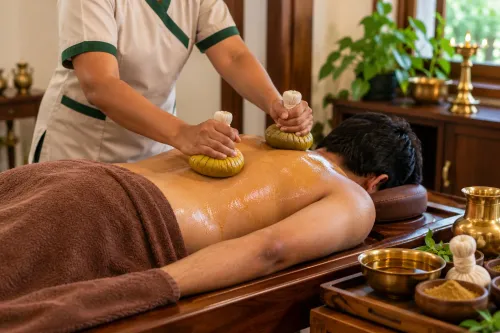
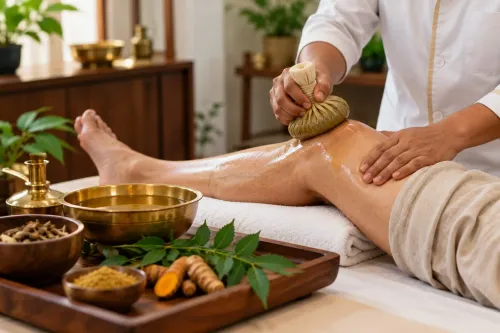
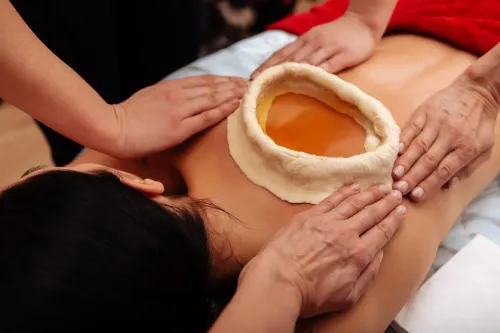
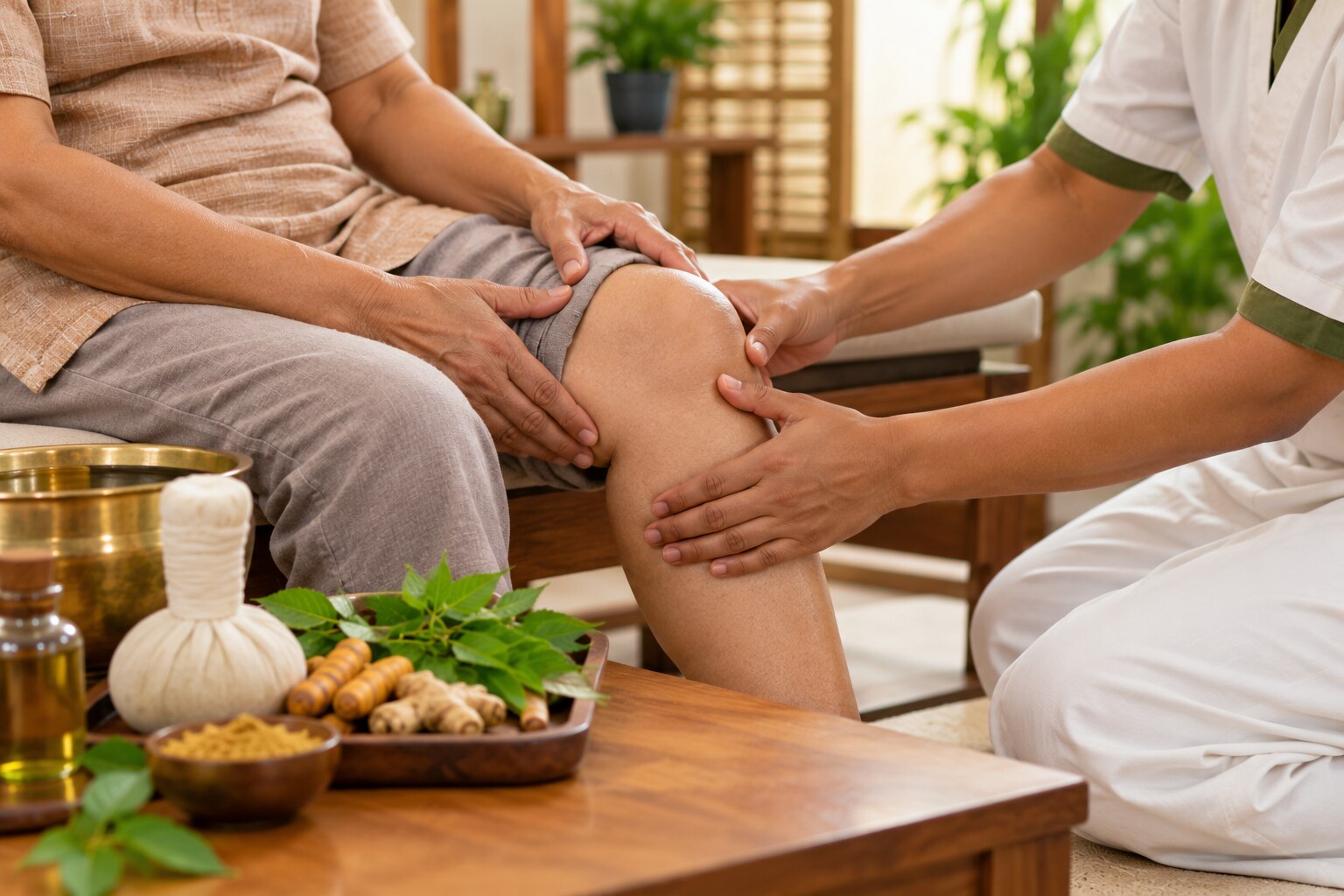
Panchakarma for knee pain is not one standardised procedure. A plan may combine oil massage, heat or steam, enemas, purgation, or other interventions, each with different time demands, risks, and evidence. Relief after massage, heat, or rest can improve movement temporarily; it does not prove cartilage repair, prevent knee replacement, or reverse osteoarthritis.
Before agreeing, ask for:
- The exact procedure and its purpose
- The number, frequency, and duration of appointments
- Contraindications, expected adverse effects, and monitoring arrangements
- The diagnosis being treated and the point at which care will be reassessed
| Option | What it offers | Trade-off or limitation |
|---|---|---|
| Ayurvedic treatment | Symptom-focused procedures and individual consultation | Evidence varies; it must not replace diagnosis or rehabilitation |
| Knee physiotherapy and knee strengthening exercises | Progressive strength, movement, and walking function | Requires regular effort; discomfort needs sensible adjustment |
| Aerobic exercise and weight management for arthritis | Better fitness and lower joint load | Weight loss takes time; 10% body-weight loss is likely to help more than 5% |
| Medicines, injections, cane, or other assistive device | Pain control or safer walking | Side effects, temporary benefit, or need for correct fitting |
| Orthopaedic evaluation | Assessment of structural injury or surgical options | Particularly important for weakness, severe pain, or abnormal imaging |
For osteoarthritis, tailored exercise remains core treatment. Combined care is preferable when walking weakness, structural injury, severe pain, or diagnostic uncertainty persists.
How can you monitor safety and decide whether to continue?
Judge progress by function, not by a few hours of relief after massage, heat, or rest. Easier movement does not prove cartilage healing or prevent surgery. Knee pain treatment monitoring needs a written baseline and a dated review.
1. Record your walking distance, stair ability, morning-stiffness duration, swelling, night pain, knee range of motion, and pain-medicine use before treatment. Repeat the same measurements at review and compare function, not just pain intensity.
2. Set a reassessment date before starting. Stop treatment and seek medical advice for worsening pain, increasing swelling, new weakness or numbness, fever, rash, jaundice, dark urine, or reduced urine output. Ask when to see an orthopaedic specialist if walking remains difficult.
3. For Ayurvedic medicine safety, record the product name, complete ingredient list, batch number, dose, and manufacturer. “Natural” labelling does not exclude lead, mercury, arsenic, contamination, incorrect ingredients, organ toxicity, or Ayurvedic herbs drug interactions.
4. Give the practitioner your full list of prescribed medicines and supplements, especially anticoagulants, diabetes medicines, and pain medicines. Do not stop any prescribed treatment without the prescriber’s advice; continue conventional review when walking difficulty persists, imaging shows structural damage, or the diagnosis remains uncertain.
Continue only when the plan produces measurable, safer movement and function. Repeating procedures without improvement is not evidence of healing.
Frequently asked questions
Which knee symptoms need urgent medical assessment?
Seek urgent care for a hot, swollen or deformed knee, fever with knee pain, severe injury, sudden inability to bear weight, or a locked knee.
What could persistent stiffness and walking difficulty indicate?
Persistent stiffness and worsening walking difficulty can reflect osteoarthritis, inflammatory arthritis, a meniscus or ligament problem, infection, or another condition requiring clinical assessment.
When is an Ayurvedic consultation appropriate after diagnosis is considered?
Arrange an Ayurvedic consultation after urgent causes have been assessed and share your diagnosis, scans, medicines, allergies, and other health conditions.
What might Ayurvedic knee treatment involve, and what should it be compared with?
Treatment may involve personalised diet and activity guidance, medicines, local therapies, or Panchkarma procedures. Compare the plan with physiotherapy, weight management, pain relief, injections, and surgery when indicated.
How can you monitor safety and decide whether to continue?
Record pain, morning stiffness duration, swelling, walking distance, sleep, and side effects. Stop and seek medical advice for worsening symptoms, allergic reactions, stomach bleeding, or new weakness.