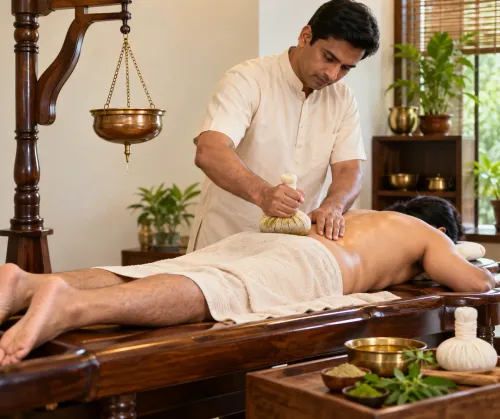
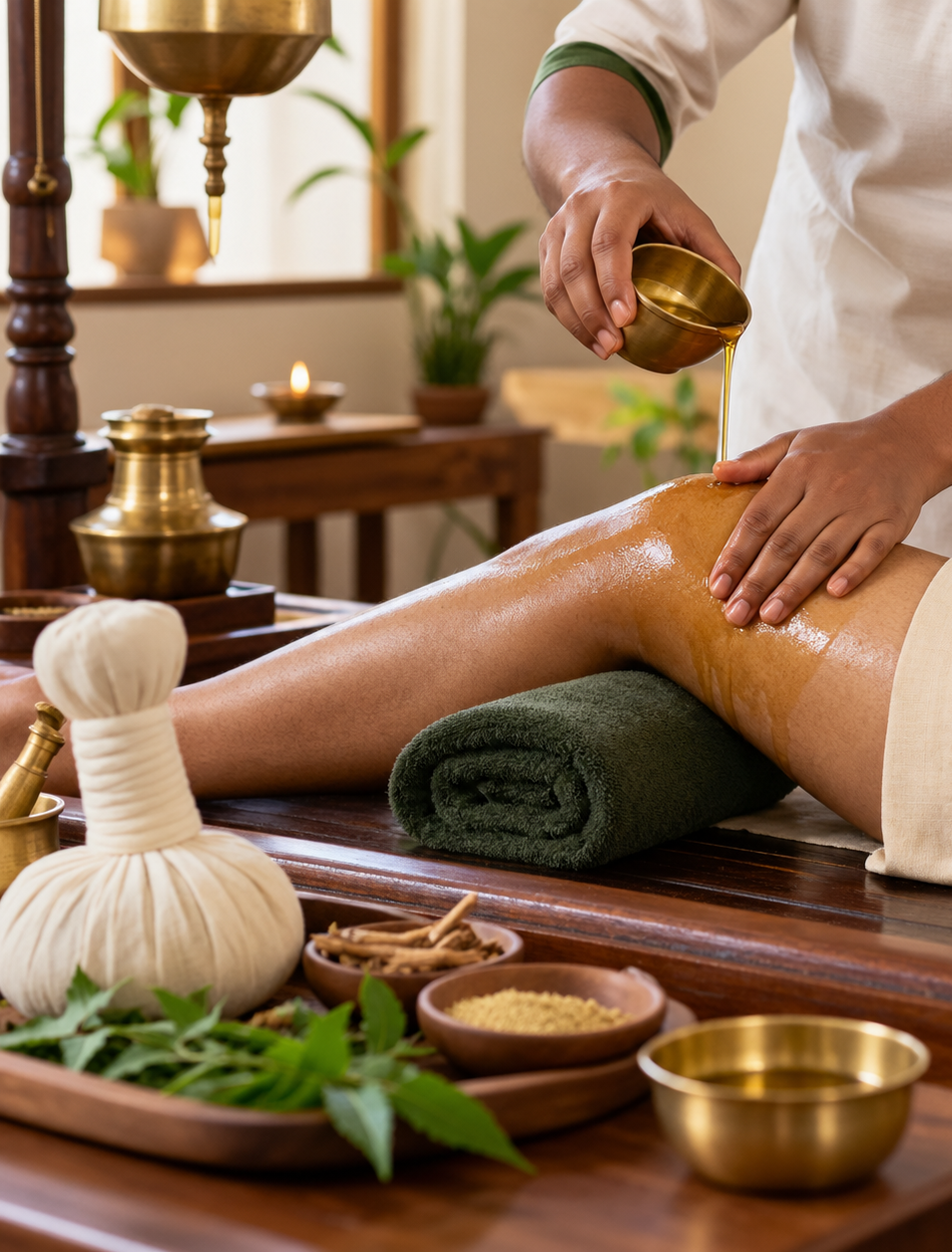
Knee pain can begin with a minor ache while climbing stairs and gradually become a problem that affects walking, exercise, travel, and everyday independence. When pain keeps returning despite rest or occasional medication, people often begin looking for an Alternative treatment for Knee pain.
The important first step is understanding why the knee hurts. Knee pain is a symptom, and its causes range from temporary soft-tissue irritation to osteoarthritis, meniscal injuries, ligament problems, inflammatory conditions, and referred pain.
When Alternative Treatment for Knee Pain May Be Considered
Complementary approaches are often explored when symptoms are chronic, when patients want to improve everyday function, or when conservative management forms part of the recommended treatment plan.
Ayurvedic care may be considered within this broader approach after the condition has been assessed.
An Ayurvedic consultation may review pain patterns, swelling, stiffness, walking ability, previous injuries, digestion, activity levels, body weight, existing diagnoses, and treatments already being used.
This helps avoid treating every painful knee in exactly the same way.
Learn What Triggers Your Symptoms
A simple symptom diary can provide useful clues.
Note whether pain becomes worse during:
- Stair climbing
- Prolonged standing
- Squatting
- Getting up from a chair
- Long walks
- Running
- Sitting with bent knees
- Activities involving twisting
Also record swelling, locking, instability, clicking, and morning stiffness.
These details can help differentiate mechanical patterns from symptoms that may require further evaluation.
Movement Should Be Appropriate Rather Than Avoided
People with knee pain sometimes stop activity completely because they fear causing more damage. Others continue strenuous workouts despite significant pain.
Neither extreme is ideal for every patient.
The appropriate amount of activity depends on the diagnosis. Strengthening muscles around the knee and hip can be valuable in many conditions, but exercises should be selected according to individual capability.
Low-impact activities may be easier to tolerate for some people. If an exercise repeatedly increases swelling or produces sharp pain, the plan needs reassessment.
How Ayurvedic Care May Support Knee Management
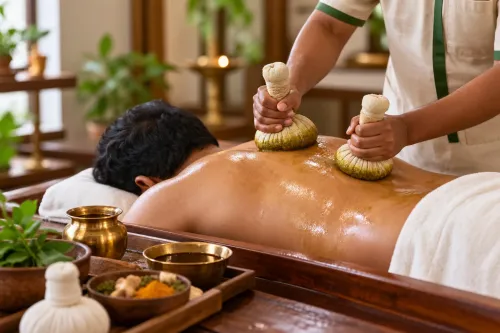
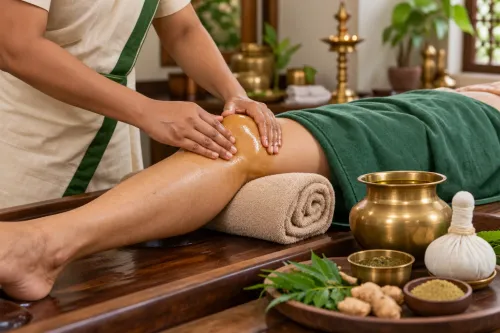
Depending on clinical suitability, Ayurvedic care can involve external therapies, physician-prescribed formulations, lifestyle measures, dietary recommendations, and selected Panchakarma procedures.
Omkar Ayurved in Pune can assess patients interested in Ayurveda as part of a broader knee-care strategy.
The treatment chosen should take into account whether symptoms are related to degenerative changes, stiffness, overuse, injury, inflammation, or another identified condition.
Patients already taking medication for arthritis or another diagnosed condition should discuss complementary treatments without abruptly stopping prescribed therapy.
When Knee Pain Needs Investigation
Seek medical assessment when there is significant swelling, redness, fever, inability to bear weight, obvious deformity, a major injury, or a knee that repeatedly locks or gives way.
Persistent pain following trauma may also require imaging or an orthopaedic evaluation.
Sudden calf swelling or pain associated with breathing difficulty requires urgent medical attention because the problem may not originate from the knee itself.
Is Surgery Always Necessary for Chronic Knee Pain
No. Whether surgery is appropriate depends on the diagnosis, structural damage, symptoms, functional limitations, and response to conservative care.
Many knee conditions are initially managed without surgery. Conversely, delaying specialist evaluation when there is severe structural damage or progressive functional loss is not necessarily beneficial.
That is why an Alternative treatment for Knee pain should be selected on the basis of diagnosis rather than simply as an alternative to every conventional option.
For people in Pune, a balanced approach can combine appropriate assessment, movement, weight management where relevant, rehabilitation, and individualized Ayurvedic care. The most useful measure of progress is not merely whether pain disappears for a few hours, but whether the knee becomes more dependable during the activities that matter in daily life.
Keywords